Nick Wilde
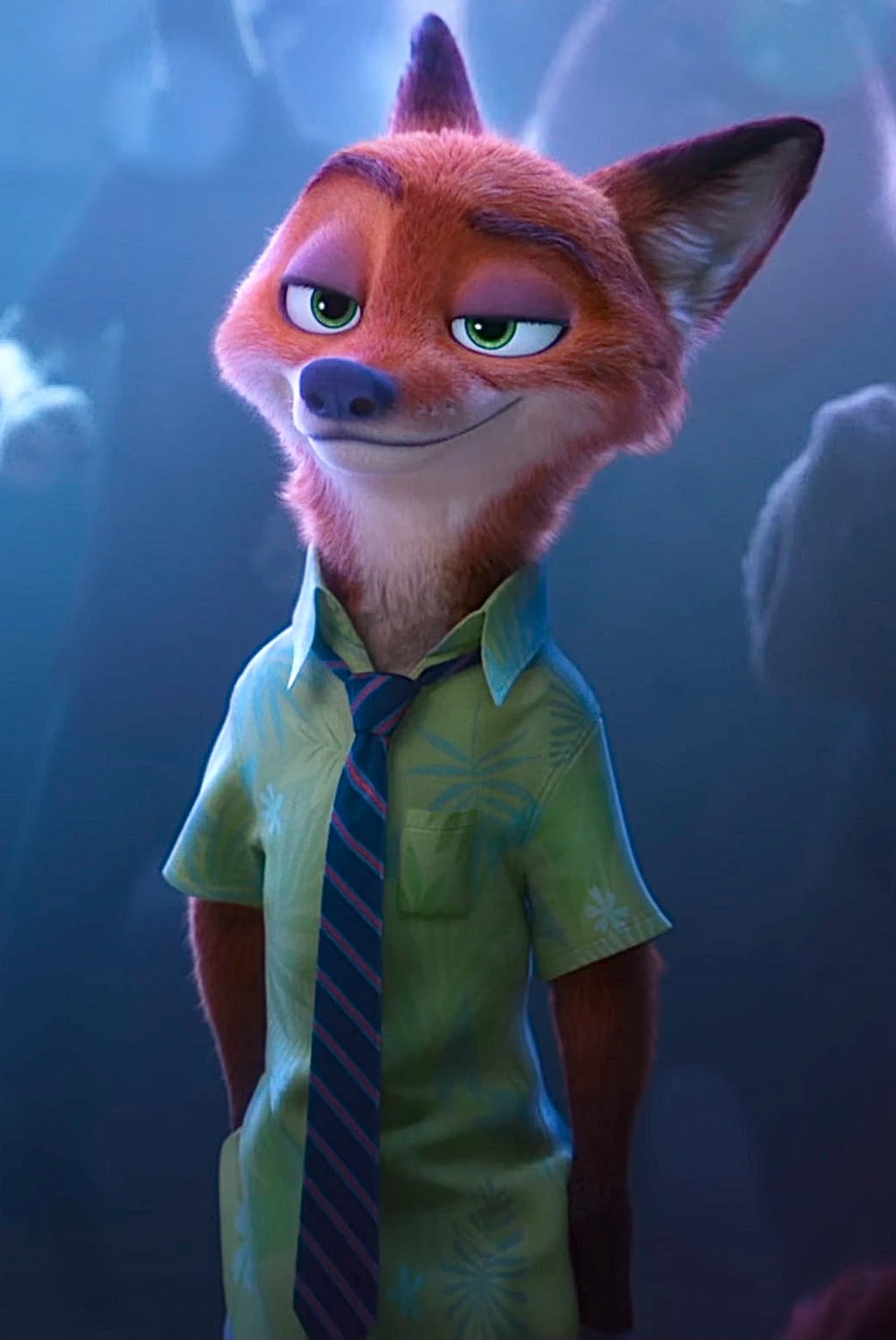
Nick Wilde is a red fox and one of the four core members of the pack in We Can Fix Pawbert. He is the deuteragonist of the Zootopia franchise — a former con artist turned police officer who became the ZPD's first fox detective. In the series, Nick serves as the pack's comic relief, emotional truth-teller, and the mammal most likely to say the thing everyone is thinking. He is married to Judy Hopps and holds the rank of Detective.
Nick Wilde is a red fox and one of the four core members of the pack in We Can Fix Pawbert. A former con artist turned police officer, his sharp wit and fierce loyalty hold the pack together.
"Wherever you are is where I want to be." — Nick's wedding vow, "Always"
Background
Early Life
Nick grew up in Zootopia with his mother, who raised him alone. The family was poor, but Nick's mother scraped together enough money to buy him a brand-new Junior Ranger Scout uniform — his childhood dream was to join and be genuinely accepted.
At eight or nine years old, Nick attended his initiation. He was the only predator. The "initiation" was a trap: the other scouts ridiculed him, shoved him to the ground, and muzzled him for being a fox. After escaping, Nick broke down in tears. The experience left him with a lifelong fear of muzzles and a deep wariness of prey mammals.
From that moment, Nick vowed to never show vulnerability again. If the world saw foxes as vile and untrustworthy, he would embrace it. He became a con artist — charming, sharp-witted, and emotionally armored. During his teenage years, he was sent to juvenile detention, where he met Finnick, a fennec fox who became his business partner and best friend.
Nick eventually fell in with Mr. Big, an arctic shrew crime boss who trusted him and welcomed him into his home. Nick betrayed that trust by selling Mr. Big a rug secretly made from a skunk's rear. Mr. Big turned him away and threatened to kill him if they ever met again.
By the start of the first film, Nick claimed to have made $200 daily since age twelve, splitting earnings with Finnick.
Personality
Nick is charismatic, sarcastic, street-smart, and deeply loyal to those who earn his trust. His default mode is deflection — jokes, quips, and wisecracking that mask genuine feeling. This armor was forged in childhood trauma and refined through decades of survival on Zootopia's streets.
Key personality traits across the series:
- Sarcastic and deflective — Uses humor as both shield and weapon; says the funny thing to avoid saying the vulnerable thing
- Emotionally perceptive — Beneath the jokes, he reads mammals with extraordinary accuracy
- Protective — Fiercely loyal to Judy and the pack; will risk everything for those he loves
- Street-smart — Knows Zootopia's underworld, its rhythms, its mammals; skills from his con artist past remain invaluable
- Slow to trust, loyal once committed — His arc with Pawbert mirrors this: initial wariness that gradually transforms into genuine family
- Growth over time — By the series end, Nick admits vulnerability more readily; the armor is still there, but he chooses when to lower it
He has a fondness for coffee and blueberries.
Physical Appearance
Nick is a red fox with a slim build, covered in red-orange fur with a cream underbelly. He has dark auburn fur on his feet, paws, ear tips, and tail tip, green eyes, and a dark purple nose. As a detective, he dresses professionally, though his style retains a hint of the easy slouch from his con artist days.
Film History
Zootopia
Nick ran a scheme with Finnick, who disguised himself as Nick's toddler son to con Judy Hopps into buying a Jumbo-pop. They melted it into "pawpsicles" to sell to lemmings, then recycled the sticks as lumber to mice construction workers. When Judy confronted him, Nick produced all required permits and mocked her idealism about Zootopia.
Judy later blackmailed Nick into helping her investigate the disappearance of otter Emmitt Otterton by recording his admission of tax evasion. Nick reluctantly joined, initially trying to sabotage her — taking her to a naturist club, wasting time at the sloth-operated DMV with his friend Flash.
Their investigation led to Mr. Big's limousine, where Big nearly had them frozen — but spared them when Fru Fru recognized Judy as the mammal who saved her life. They visited jaguar Renato Manchas in the Rainforest District, who went savage and nearly killed Nick before Judy cuffed Manchas's ankle to a lamppost.
When Chief Bogo demanded Judy's badge, Nick angrily defended her, calling out Bogo's bigotry. On a cable car afterward, Nick revealed his Junior Ranger Scout trauma — the muzzling, the tears, the decision to embrace the "sly fox" stereotype. It was the first time he had shown his true self to anyone in decades.
Nick cleverly suggested using traffic cameras to track Manchas's disappearance, leading them to Cliffside Asylum and Mayor Leodore Lionheart's secret operation.
Before Judy's press conference, she offered Nick a partnership and returned his carrot pen. He was deeply moved — then devastated when Judy suggested the savage behavior was due to predator "biology." He returned his filled-out ZPD application and left. Judy's near-use of her fox repellent during the confrontation confirmed the prejudice she still carried.
Three months later, Judy returned with a breakthrough about night howlers. Nick initially rebuffed her, then forgave her when she tearfully apologized — playing back her confession on the carrot pen he had kept all along.
They traced the conspiracy to a ram named Doug weaponizing night howlers and ultimately to Dawn Bellwether as the mastermind. In the museum, Bellwether shot Nick with what she thought was a night howler dart, but Nick and Judy had swapped the pellets with blueberries. Nick pretended to go savage, then revealed the ruse while Judy recorded Bellwether's confession.
Nick joined the ZPD as the first fox officer. Judy badged him at his graduation ceremony. In the epilogue, he got Judy to admit she loved him. His smile in return said everything.
Zootopia 2
Nick was partnered with Judy as a detective. They attended mandatory therapy with Dr. Fuzzby for their dysfunctional partnership dynamics.
During the Lynxley conspiracy, Nick and Judy were framed by the Lynxley family for Gary De'Snake's attack on Chief Bogo. They became fugitives, working with Gary and Nibbles Maplestick to uncover the truth about the Weather Walls and Agnes De'Snake's stolen patent.
At the Weather Walls, Pawbert Lynxley revealed his betrayal. After poisoning Judy and throwing Gary into the snow, Pawbert found Nick and attacked him, claiming Judy was dead. During the fight, Gary called out to Nick, who threw the antivenom pen down several floors to Gary — saving Judy's life.
During the escape from the Lynxleys, Nick accidentally broke prisoners — including Bellwether — out of jail. The heroes recovered Agnes's patent from Reptile Ravine. The Lynxley family was arrested.
Nick and Judy were cleared. Their partnership and relationship emerged stronger. Nick's words: "Love you, partner."
Series History
Season 1: Wary Acceptance
Nick draws escort duty for Pawbert Lynxley's courthouse transport alongside Judy in The Weakest Lynx, and his hostility is immediate: this is the mammal who poisoned his partner and told him she was dead on an ice ledge. He is harsh in the van until Pawbert trails off trying to explain himself, and Nick finishes the thought — that he wanted them to love him. He knows that ache. When a hit squad takes the transport he kicks the rear door open, hauls Judy out of the loading dock's firing line, and lays down covering fire while Luther works the street; the shooters who go down are Luther's, and the one Nick fires on gets away. Afterward he refuses to soften the arithmetic: the family did not want Pawbert frightened, they wanted him dead. That night he pushes a sandwich across the safehouse table, calls him a monster he understands slightly, and jokes that forgiveness is a subscription he has only trialed. When the crying starts down the hall Luther takes the door and Nick leans against the wall opposite him, and neither leaves. In The Blacklist he pours the lynx coffee and says he knows what it looks like when everyone has already decided what you are. The rest he saves for Judy on the porch: he has been where Pawbert is, and he wants the story to end differently this time.
He turns the corner privately. In The Eraser he clears the vault corridor by inventing a counterfeit-currency investigation in the City Records lobby, herding the guards to the far end of the building on volume and a badge. Alone at the table that night he reads the psychiatric history Breck Clawmark fabricated to make Pawbert unbelievable at trial — manufactured violence, diagnoses assembled to erase a mammal on paper. Nick has walked into rooms that decided what a fox was before he got there; this is past that, and it keeps him up. By The Architect he is seating Pawbert's earpiece and running his comms through the Infrastructure Gala, feeding him unhurried instructions and closing with his first plain praise. He also puts the question of Luther to Luther's face, citing the leaked bail story, contacts that move too fast for any officer, and a sting assembled like a hundredth repetition. He and Judy agree privately that whatever Luther is, he is not ZPD.
The safehouse breach in Breach settles it. Nick leads Pawbert and Judy out through the hidden tunnel on a penlight beam, refusing to let Pawbert turn back toward the gunfire, and at the drainage canal he draws and steps in front of him when headlights appear. At Site Two, with Luther flatlining and Pawbert insisting it is his fault, Nick delivers the speech that defines their early relationship: the mammals worth saving are the ones who do not believe they are, and Luther saw something in Pawbert worth bleeding for. Neagley names ZSI at the canal; Chief Bogo arrives later to confirm the arrangement he authorized. Once Luther is conscious, Nick pulls a chair to the cot and says outright that he was wrong about him. Recovery in Convalescence makes him the pack's permission-giver: he is stress-burning vegetables when Pawbert fixes the heat and mentions that Milton banned him from the kitchen, and Nick holds out the spatula and tells him the vegetables are not his father. A hustling story about a rug and three furious hippos produces Pawbert's first real laugh, and Nick tells him not to apologize for it.
Home is Nick's project. He declares the safehouse depressing, organizes a cash-only shopping run, and brings Pawbert along because being invited is the point. He buys a corkboard nobody asked for and answers the objection that there is nothing to put on it with a single word that leaves the future open. At the grocery store he calls the pack a family before deciding to, and does not take it back. He institutes movie night and gives Pawbert first pick. In Clear Skies the MOSAIC archive surfaces a tile of a younger Nick mid-scam — leverage the family held over Judge Manton, whose problems Nick once handled quietly — and he tells Judy he is done being ashamed of who he was. When Pawbert comes out to him and Luther, Nick's first response is an unbothered question, and it turns gentle the instant Pawbert says someone paid a price for it. He commits to finding the family's file and destroying it, then reads Luther's cue and leaves so Pawbert can burn it alone. Told on the porch that Pawbert does not believe Soren survived, Nick has nothing to fix and says only that the age of a wound does not make it count for less.
The Vault raid puts him in persuasion mode, using Pawbert's account of the quarterly briefcase exchanges to crack Sterling Pebbleworth before Luther applies the leverage. In Station 118 he climbs into a burning Canyonlands office with Luther, gets Perry Stackwell out, and comes down the stairwell with an armful of scorched ledgers the 118 crew treats as evidence of poor judgment. At the firehouse dinner he catches Pawbert watching Eddie Diaz take a video call from his son, reads the longing without being told, and offers that Pawbert has something similar now, only newer. Precinct 99 introduces Jake Peralta and the recognition is instant; asked whether he misses hustling, Nick answers honestly — sometimes, for the freedom — then says he prefers who he is now. During the Halloween Heist he allies with Jake as a self-declared chaos partner and spends a night as his old self inside a game, complete with a stolen facilities coverall, an enormous false mustache, and a gas-leak story Terry Jeffords dismantles in four exchanges. He is unsettled when Pawbert mimics Jake's voice to steer him clear of a trap, tells him never to do it again, and concedes he is more dangerous than he looks.
Nick becomes the pack's emotional barometer through the middle stretch. In Stay he clocks that Pawbert has not slept before anyone says so, tells him he can no longer be fooled, then leaves him to it; the morning after the breakthrough with Luther he pours four cups of coffee and asks nothing. In Soft Launch he catches the two of them leaving the same bedroom, wins a standing bet with Judy on the timing, and has the best morning of his year. The teasing runs long and then stops cleanly: he understands how badly this could be used against them and does not intend to make it a problem. Next morning he tells them he is happy for them, dry enough that the dryness is the disguise, and diagnoses them both as emotionally constipated. Second Chances pairs him with Sergeant Tim Bradford on the warehouse entry at Kellan Slink's operation, a partnership that works despite Nick's refusal to stop narrating it. Back at the safehouse he names what Pawbert is doing at the stove — twenty years of the same thing, done with sarcasm — then tells him about the kits who muzzled him in a basement for entertainment, and the two decades he spent proving them right. His eyes go to Judy's door when he explains what changed.
The Words makes him answer his own question. Nick triggers the session by telling Pawbert he does not get to decide his penance by suffering in silence, then speaks last, after Gary De'Snake's forgiveness and Judy's refusal. He names the cruelest part of the attack — being told Judy was dead and believing it — and opens a third path between absolution and abandonment: he will not be Pawbert's absolution, but he will stay in the room while Pawbert learns to carry it, because he has been reduced to his own worst act and believed it was the whole of him. The Criminal Minds crossover puts the instinct to work. Nick names the pattern that summons the BAU — three dead witnesses and three identical notes is a script, not grief — and works the trace with Derek Morgan and Penelope Garcia. In counter-script preparation he ties Dr. Fuzzby's line about guilt not being instructions to his own self-punishment, says he wishes someone had handed him the same thing, and gives Pawbert the directive that holds the next episode together: break toward the pack, not away. At the Meadowlands arrest in I Choose to Stay he answers Mawl's claim that the victims chose freely, and turns his own instruction into settled fact.
Green Candle opens with Nick finding Pawbert baking his mother's cinnamon rolls before dawn and shouting the household awake over a birthday nobody was told about. He mobilizes the day inside an hour, negotiates the decorations down from balloons, and gives Pawbert a mug carrying his anchor phrase and a parenthetical about soup. In Mandated Joy he pushes the pack out to a cinema, and the argument that ends the debate arrives without humor: Pawbert is going to prison, so let him see a movie first. He spends the next morning outside a bedroom door composing material about thin walls, then closes the routine by telling Luther, once and seriously, that he did well. In Counsel he is first to say aloud that prosecutor Grazella is throwing the case, pricing the missed objections against a conviction record that makes them impossible. Under Harvey Specter's moot-court cross in Moot he explains why he believes a mammal who tried to kill his partner, and the answer comes from expertise rather than sentiment: Pawbert is a terrible liar, and his change is the kind nobody applauds rather than the kind performed for a jury. Asked which side Pawbert is on, he gives an answer poetic enough that Harvey stops to say so. On his way to bed that night he tells Luther and Pawbert, unasked, that what they have is good.
He testifies twice in The Trial — once for the prosecution, stripped of every deflection, and once as a victim impact statement that is the most exposed he has been all season. He names what Pawbert did to him as calculated and cruel, bears witness that he has watched him daily since and knows a con when he sees one, and leaves the sentence to the court, saying only that he has never before met a mammal who stayed when running was available. On the last night at Site Two he manages his only hug of the season and asks Pawbert never to mention it. In Last Morning he makes breakfast because it is what he does when nothing else is available, insists on lunch too, and asks the table not to make it weird before saying the plainest thing he says all season: the change he watched was slow and boring and worked for, and he respects it. At the curb he promises Wednesday visits and terrible vending machine snacks, then reduces all his advice to one word. Afterward he cleans the emptied safehouse, keeps joking into a room with nobody left to laugh, and notes that Pawbert will need somewhere to put things again. That evening he will not let Luther go home alone. Pawbert's mail reaches ZCF that night: a letter opening with Nick declaring prison dumb, escalating into "Stay visible. Stay annoying. Stay alive.", and closing by billing him for soup as a legally binding debt.
Season 2: Naming the Pack
A year on from the sentencing, Nick is outside every wall that matters. In Rook he pushes Agent Ross to unclassify the weather wall angle in front of Bogo — his friend is being attacked in prison over it, so either ZSI trusts them with the intelligence or it does not — and Bogo's nod opens the file. At home that night he ruins a pot of pasta while telling Judy he cannot lose either of them, Pawbert or Luther, then lies awake waiting for a Sunday visit the lockdown cancels. By Protective Custody the helplessness has sharpened, and when Bogo reports the asset is unharmed, Nick's correction is immediate: the asset has a name. When the extraction comes at dawn he is already awake as the phone buzzes, and at the precinct, told both are alive, his legs nearly give out. At Site Two he pulls Pawbert into a rough hug and complains that visiting through a window is terrible for the complexion, then turns to Luther in three beats — you look like hell, you kept him alive, thank you.
Safehouse makes him the pack's engine of ordinariness. He wakes the house with deliberately loud cheer, burns a breakfast he claims was made with fear and determination, and clears the day so Luther and Pawbert can have real time rather than prison time. The composure holds until the apartment, where he admits to Judy that he spent three days expecting to lose both of them. Collecting Pawbert's property at ZCF he stands holding a year of letters and offers Officer Kett that they must have meant something; Kett corrects him — everything — and Nick promises that what Warden Hartwell did will have mattered. When Pawbert pulls the green sweater back on that evening, Nick approves without ceremony. In The Vacuum he reduces hours of shell-company diagrams to plain speech: someone is buying explosives and stealing weather wall credentials, and nobody can say who wants Pawbert dead.
The season's emotional turn arrives in Unconditional. Judy proposes calling Dr. Fuzzby after Pawbert's flashback in the kitchen at three in the morning, and when Pawbert objects to putting everyone through another session, Nick asks him through what — caring about him — and takes out his phone. His forgiveness comes in the only register he can manage: Pawbert took every joke and threw better ones back, he did the work, and he is a friend, a real one. Then Nick makes celebratory pancakes shaped like hearts that Luther identifies as kidneys, and it is the pancakes rather than the forgiveness that produce Pawbert's real laugh, the one Nick says they have all been waiting for. The 9-1-1 crossover in Collateral hands him the bill. Eight mammals die in the substation bombing; at the blast site his paw finds Judy's without either of them deciding to, and beside the body bags he insists the dead will have names rather than numbers. That evening the arithmetic stops him mid-sentence — breakfast had been an argument about hash browns, and by nightfall eight households have funerals to arrange.
The Uncle takes the pack to Lynxley Manor, where Nick's contribution is calibrated irreverence — the house is imposing in a way that suggests the family owned several politicians — and then silence while Pawbert works through his mother's rooms. After the interview with Milton leaves Pawbert on the floor of a maximum-security corridor, Nick steps between him and the approaching guards and calls it a family moment. He offers to drive; Luther hands over the keys and gets in the back, and Nick adjusts the seat and pulls out without remarking on it. At the safehouse he makes tea because it is something his paws can do, and closes the night by telling Pawbert that rest is practically mandated. In Blood Relations he needles Pawbert for setting records in prison visitation, then works the perimeter at the Beaverdam raid, where the escaping vehicle misses him by inches. His read is instant: the driver had done the math on backstops and left them nothing to shoot at but rubber.
Forced downtime in Quiet Room finds him unable to stand still — channel-surfing, push-ups on the living room floor, and the plainest statement of the pack's condition: days of fight-or-flight with nothing left to fight and nowhere to fly. When both bedroom doors open onto the same narrow hallway that afternoon, Nick breaks first, names what everyone is refusing to name, and converts the mortification into a roommate-boundaries negotiation over dinner. During the Criminal Minds crossover in The Cartographer he watches Pawbert through the observation glass beside Luther and tells the wolf what the wolf will not tell himself: he is allowed to be proud. After the call to Soren in Return Address he makes pancakes for dinner and defends a scorched one as a portrait of Bogo, building something warm and imperfect because nobody knows what to say. Pawbert offers to teach him properly, and he accepts.
The Precinct 99 crossover reopens on a coincidence Nick chooses to find eerie: the Fungus Emporium case reaches them in Nine-Nine a year to the day after their first visit. He and Jake restore the elaborate pawshake on arrival, and Nick resists hosting the heist at the safehouse on the single ground of security, twice, until Holt reframes it as a vulnerability audit. The heist itself, in The Audit, puts him in the ductwork with Jake, where he catches the gap in the kitchen camera's coverage and reports it under the rules instead of exploiting it. When Jake calls Pawbert "your boy" at midnight, Nick starts to correct him, stops, and picks a different word: he's pack. It is the first time he says it aloud, and it lands as a claim rather than a joke. At Mole Harbor in Waiting Game he takes the east approach with Sergeant Bradford, loose and low against the wolf's compressed precision, narrating throughout, and earns the closest thing Bradford offers to praise.
The Wall starts with every phone in the safehouse going off at once, and it is Nick who names what has happened while the others are still reading: the Tundratown-Sahara interface, a mass casualty event, and the word the broadcasters are already using. He works the perimeter with Judy through the day, moving civilians out of climates their bodies were never built for while the wall bleeds cold into the desert and heat into the ice. On the drive back he tells Pawbert what Pawbert will not accept — that he could have frozen and did not. When Clawrence Lynxley takes over every screen in the city that night, Nick sizes him up out loud — he understands the engineering, he has an army of his own, and he is carrying a grudge against Zootopia — and adds that the rehearsal for all of it had been running long before any of them learned the name. He takes the second watch.
The siege turns him operational. In Foxhole it is Nick's street ear that catches the hole in the city's noise at three in the morning — the specific quiet of mammals working hard not to be heard — and he wakes Luther with the shoulder squeeze that serves as their code. The audit pays out at once: the adjusted camera shows the approach and the reinforced door holds; they come through the kitchen window, the one flaw nobody could close in time. Nick designs the exit, sending Luther and Judy to sell a front-door defense while Pawbert takes the windowless interior hall, then goes over the top through the duct he crawled during the heist and drops onto the operative covering the garage. Inside Precinct 1 he keeps Pawbert company — protecting his own attempted murderer from a terrorist uncle was never on the bingo card — and calls him the defective Lynxley, the one that came off the line with a conscience. When Pawbert reads the harbor demand as a decoy, Nick gets there a beat ahead of the room and puts it on the radio; minutes later Judy spots an armadillo at the front desk in tactical boots and Nick takes him down as the paw goes for the jacket.
Tempest is fought with whatever the building offers — a keyboard thrown to turn a shooter's head, a fire extinguisher emptied to erase a corridor's sight lines. Coming around a corner into a jackal at point-blank range, Nick fires, and the report rings in his skull; the sick turn under his ribs gets filed away, because surviving comes first. When the attackers withdraw and Pawbert is gone, taken under cover of the entire assault, he splits his knuckles on a wall. Luther arrives and takes him by the collar, and Nick neither flinches nor pulls away — they tried, and the words are grief rather than defense. In the vehicle afterward he chambers a round and gives the rescue its line: let's go get our lynx. He breaches the Central Weather Interface with Reacher's team in The Crown and reaches the wounded Pawbert with the only word available — idiot, absolute. Stripped of humor in the hospital hallway, he asks Judy when this ends; her answer, that it ends when it ends and they keep showing up, is one he repeats back.
His fiercest protest comes in Aftermath, when Pawbert states that he still owes the time: he was shot on live television refusing a terrorist, and the law that sends him back is wrong. Addressed directly as one of the mammals Pawbert hurt, Nick opens his mouth and finds nothing in it. He nails boards over the shattered window and enjoys the hammering more than the carpentry warrants, then tests the clemency figure aloud and lets Judy tell him one year is only a maybe. Pressed on the couch that night about when any of this ends, he gives the only answer he has, which is that maybe it does not end so much as change into something else. He is the ringleader of the birthday in Found Family, barring Pawbert from his own kitchen, pitching the Sahara Square markets, and joining Judy in getting Gary De'Snake to the door; the musical is Judy's choice, and afterward Nick admits the bear got him. He ices the cake HAPPY BIRTHDAY TO OUR FAVORITE FELON and volunteers that his first draft was vetoed. At the clemency hearing in The Ask he tells the Mayor he did not want to like Pawbert, because monsters are simple and hating one costs nothing — but Pawbert kept showing up, and he asks for a chance rather than a pardon.
The safehouse is decommissioned in Last Day, and Nick finds a flour pawprint inside a kitchen cabinet and leaves it as a puzzle for whoever comes next. At the emptied corkboard he and Judy remember the night the first safehouse fell, when Pawbert cried over Luther waking up because nobody had ever stayed; Nick's answer carries two seasons in it: they stayed. His parting reframe is the one only he could give: if prison made you this, imagine what freedom is going to do. At the transport in Clean Slate he keeps the goodbye small — Wednesday visits, terrible snacks, one year — and tells Pawbert he has done harder things, having survived them. Alone with Judy afterward the year finally lets go of him, and what he says into the quiet is not a joke: Pawbert is going to be okay, and so are they.
Season 3: Crisis Solidarity
Nick does not appear in the season premiere, which belongs to Luther's insertion into ZCF; he survives in it only as the author of letters Pawbert keeps (Licence to Claw). His own season opens over coffee in Fur Your Eyes Only, where a broadcast about Leodore Lionheart's new charges takes the deflection out of him. He puts the objection plainly to Judy — the lion held sick mammals in cages without ever putting them before a court, and dressed the whole thing up as protection — but what surfaces when she asks whether he is all right is not about Lionheart at all. He has no patience for mammals who cast themselves as saviors. The mood breaks only at Bellwether's recapture, and even then he deflects the credit: Judy is the legend now, and he is the plus-one.
The Precinct 7 exchange pairs him with Chen for the third time — after Kellan Slink's warehouse and Mole Harbor, he calls it a pattern rather than coincidence — and the needling settles at once into something he enjoys. A shoplifting call turns up a young raccoon, and Nick talks him down with his paws visible and his voice level, closing the escape route by naming it rather than blocking it: Chen has the door and is faster. What comes out of the jacket is canned food and a folded blanket. Nick has stood in that store himself, and points him toward shelters. Chen calls it empathy; Nick calls it experience. Asked whether thinking about mammals like that helps, he admits it does not, and that he does it anyway.
Back at the precinct he drifts into evidence processing out of restlessness, and it is Smitty who recognizes a ZCF break room in a photograph from courier Quillford's effects. Nick supplies the rest: the whole stack is prison corridors, and a petty thief has no business carrying them. He and Judy work Quillford until he gives up that the delivery was meant for someone inside Precinct 1, then leave him an hour to sweat on Bradford's advice. When they open the door again he is dead, killed during a two-minute gap in the camera feed, and Nick's conclusion needs no discussion — the killer is in this building, wearing a badge.
He and Judy carry that to Bogo at City Hall in Worth Clawing For, and the news that ZSI already has an operative inside ZCF sends them back to the cruiser with a worse problem. Judy says it out loud — Pawbert is in that prison, eight months from release — and Nick's paws go white on the wheel. He cannot confirm what he suspects, but he lays the pieces out: Luther went dark on ZSI work, and Luther would tear the city apart before he let anything reach Pawbert. It is a hope, hedged to the last. When Judy covers his paw on the wheel, he takes the comfort without reaching for a joke.
Fourteen officers had access to holding when Quillford died, and Claw and Present Danger is Nick and Judy eliminating them one at a time, unable to avoid the arithmetic: whoever is left is someone they have shared a locker room with. The break comes from Pawley, an otter dispatcher who remembers passing Officer Jasper Paddock near holding. The beaver's six spotless years read to Nick as a cover rather than a credential, municipal maintenance before the badge explaining the access. Nick runs him down in the parking garage, and the go-bag spills everything needed to disappear. Paddock offers no defense in interrogation, only the shape of the thing: six years in place, waiting for whichever day his employers chose. Then every phone in the building goes off at once.
The pursuit in Dead or Alive runs on Nick's insistence that the city is looking the wrong way. He raises Bogo through Clawhauser and reframes the night: Lionheart broke out in order to get somewhere, and the three hundred inmates loose in the city are the cover for it. With the alert network compromised and every unit committed to the prison, Bogo can give them permission and nothing else. Judy names Dead End Station; Nick is the one who can say why it fits, from years of knowing which corners of the city stay dark — a decommissioned terminus with abandoned bays and no cameras, which he calls the city's forgotten throat. Nick puts the cruiser through the rear guard's roadblock while Judy shoots.
They clear the station's skeleton crew in No Time to Die, Nick taking a radio out of one operative's paw before the call can go out and dropping a second as the mongoose lines up on Judy's back. What he finds afterward matters more. Lionheart's abandoned command post holds a manifest of paid agitators — names, addresses, fees, and a schedule fixing where each of them stands and what they shout. Nick has built this kind of thing himself and recognizes it on sight as a script for manufacturing consent. Judy asks how they prove that to a plaza full of strangers, and he has nothing better than one problem at a time.
In A Wanted Mammal he starts pulling the plants out of a plaza hundreds deep, having read the scaffolding under the noise — chant leaders spaced one every thirty feet. When an agitator tries to recast the arrest as political suppression, Nick does not argue; he reads out the mammal's name, address and fee, names the shell company that hired him, and tells the mammals nearby to look it up, and the support evaporates. Then Lionheart, on every screen in the city, exposes Luther's Cliffside history and the pack's relationships, and Nick recognizes Bellwether's mistake: a lion so pleased with himself he is building his own case on camera. He climbs a bench, names himself as the fox who solved the Night Howler case, and tells the plaza to hear what he has just confessed. Judy takes the second half. The exodus does not stop until the signs are on the ground.
The reunion on the City Hall steps puts both halves of him on display. He greets Luther by telling him he looks terrible, then turns the wolf's now-doomed division into a pun that earns a laugh and a wince from cracked ribs, and sits through the Cliffside confession without intervening. Afterward he offers Pawbert the option to run, a new name by midnight, not as temptation but so that staying is a choice. Pawbert refuses; Nick lets it go, saying only that this is what pack does, and that he will bring snacks, probably legal ones. The next morning Bogo shreds a stack of complaints about both couples, Nick and Judy's relationship swept in with Luther and Pawbert's. Nick never answers them; standing on a bench and giving a plaza his name had already answered them.
Season 4: The Chart and the Fire Escape
Nick spends the night before Pawbert Lynxley's release lying awake beside Judy in Release, naming the fear a year of visits never settled — that prison may have changed Pawbert invisibly. At the gate he and Judy hang back to give Luther the first moment, then Nick breaks the stillness by asking whether hugging a reformed felon counts as cutting in line — the joke that turns Pawbert's crying into laughing. The mansion undoes him: eight bathrooms counted, a question about which hallway the ghosts live in, a stop dead at the name on the hall portrait.
He takes a day off in Unboxed to walk Pawbert through the ID office, the bank and the phone store, where learning that Milton assigned every number Pawbert ever had drains the humor from his eyes — he tells the lynx to pick one his father would hate. The day's other casualty is Nick, pushed into the dental chair he has avoided all year and talked through it by Pawbert. That evening he adds Pawbert to the pack group chat, and at the door drops the performance long enough to say he did well.
Asked in Transfer whether he and Judy should move in, Nick sets the deflection aside and gives three reasons — Pawbert needs them down-the-hall close rather than visiting close, Luther has been carrying house and recovery alone, and Nick likes waking up somewhere pack simply is. They keep the Acorn Heights apartment as Judy's contingency. When parole officer Burrows balks at three armed officers living with a parolee, Nick argues the case himself. Alone in the kitchen that night he tries the word home on, finds it still borrowed, and decides that may be a matter of time.
Luther's parents let themselves in during Open Enrollment, and the childhood nickname Lute reaches the foyer before Nick has even seen them; he seizes it, spends the evening on how alarmingly healthy the Pawthornes are, then ends the night with the joking gone: his and Judy's doors stay open too. On the drive in to Luther's first day as ZSI-ZPD Liaison in Liaison he hears the fear under the desk-job complaints and offers the only thing that fits: what helped him at the ZPD was accepting they would see the real him anyway, and finding they liked that version. He carries coffee into the windowless office hours later and answers Luther's doubt by saying he knows him, which is better. That night, after three years of thin walls, he and Judy stop being quiet — and learn over pancakes that the ducts carry sound between their wing and the rest of the house.
In Day Pass he diagnoses what Pawbert lacks as stupid joy and steamrolls every objection to Deersneyland, where a 4D bug theater leaves him rattled and attendants turn Luther away for being too tall and Judy for being too short. He presses Bogo on the claim to be running a security assessment in a gift shop, gets nowhere, and enjoys it. When the university clears Pawbert's holds in Transfer Credit, Nick credits the day that kept him off his phone and asks the question nobody else does — whether leaving Business is really about Milton. Reading the personal statement that night, he manages only that it is really good.
In The Letter he abandons the pretense of casualness three seconds into the acceptance-day group hug, and insists for the record that he always knew; when Pawbert says he wants to be useful in a way that is not about control, the wisecrack drains out of his face and he calls it a good reason. In First Day he reminds Pawbert that he came out of prison better than he went into it, and a classroom is not what will break him; when Pawbert comes home hollowed out by a case study about his own family, Nick tells him hollowed out is how courage feels from inside. He is insufferable about the clipping of himself and Judy on Dillamond's slide. Solo Shift keeps him lighter — Pawbert is an unpaid intern, not a miracle worker — but he stops stealing vegetables when Pawbert describes a timber wolf breaking down over having nowhere to sleep, and lets the silence sit before reaching for a joke about the pasta.
The press siege in Front Lawn turns the questions on him. Reporters shout about a fox and a rabbit through the car window, and his deflection — that the ice cream is melting — comes back within seconds as a quote about dismissing public safety. Inside the house he proposes that they at least get credit for being creatively deviant, though his ears stay flat and his tail low all afternoon. Maris tells him to put the anger somewhere productive; he admits he already reacted, internally and very loudly. In Charter he tells Judy he wants to stop pretending they might leave, and that he never expected a pack or a home that was more than a place to sleep. They ask Pawbert and Luther for permission rather than announcing it, and Nick drafts a written pack charter that evening, closing it with the Wilde Amendment — they do not pry, they do comfort, they do snacks.
Nick reads the different quality of Pawbert's silence in Tips and draws the Snarlbucks plan out of him. He sets his mug down when four green ones turn out to have been bought with a first shift's tips, then covers by demanding they be used immediately and defining Pawbert energy as competent soup, stubborn plants and judgmental silences. In Case Study a classmate's presentation calls his partnership with Judy an unstable foundation; at dinner Nick asks directly for the bad parts, and when Pawbert repeats the phrasing his ears flatten and he offers a single flat word. Judy's paw finds his under the table. He thanks Pawbert for standing up in that room, then declares himself contractually obligated to mock something.
Luther's disappearance in Radio Silence casts Nick as the one who has done this before. He relays the closed-file text, tells Pawbert that Luther used to vanish for days, once for weeks, covers the gap by insisting the wolf is unkillable, then gives the advice that helps — keep going to class and work, do not sit with the phone. When the Snarlbucks crew invites Pawbert out, his reply to the pack chat is immediate and unqualified. At the hospital in Incoming he skips the argument and asks Dr. Bailey for the discharge paperwork, on the grounds that a wolf who could be home with Pawbert will never stay. He drives Luther home and announces that he is making a chart — laminated — with a category for buildings collapsed on Luther already standing at one.
The Chart puts his comedy and his vulnerability in one day. Sent out by Pawbert for a rare day off, he and Judy walk to Acorn Heights, look up at the walk-up that held three years of their life, and end in the alley below the fire escape where Nick first raised marriage. He says he expected her to refuse — the shaking is Judy's read, and he concedes it — because "mammals like me don't get happy endings." When Judy says he got one, he corrects her — what he got was her, and she is still going rather than finished, which is why some part of him stays braced for the day it comes apart. Home that evening he builds The Chart on poster board, in penmanship left over from forging documents — six escape attempts, five times Pawbert had to catch Luther — and rules the bathroom assistance permanently off the record. Later he tells Judy he thinks about growing old with her, says plainly that he is not proposing, and settles with her on one day a month alone. By morning The Chart is laminated, with two new categories.
He keeps expanding it through The Apron Incident, where finding Pawbert in Luther's lap in a borrowed Snarlbucks apron produces a dated, annotated entry with a freehand drawing — and, afterward, a quieter observation that Pawbert is building a life outside the house. When Clawhauser leaks Luther's birthday in Operational Surprise, Nick proposes the surprise party and names it Operation Birthday Wolf, then blows his own cover by claiming an interest in a cheese appreciation club to a wolf who has heard him call cheese milk that gave up. Pawbert supplies the gift and Nick names why it works — evidence is what Luther understands — then has The Chart framed in mahogany behind museum glass.
In Routine he burns hash browns, then greets the painting Pawbert brings home with a deadpan appraisal. Map Day repeats the burnt breakfast with Judy standing by holding a fire extinguisher; when she suggests revisiting the old neighborhood and stops short of naming why, his teasing falls away, and they spend their own day at Acorn Heights and the same suspicious noodle place. That evening he needles the other two about their day, then drops it on his way out to say he is glad they had a good one. In Full Circle he reads accomplishment on Pawbert's face before anyone speaks, and renames the navigator role a professional maze-walking guide.
Pawbert's grades open From Now On: Nick is outraged by the single A-minus, then states flatly that the lynx is impressive, as fact rather than compliment. Making popcorn that afternoon he asks where the cooking came from, listens to Pawbert describe Lillian and the years he spent making himself invisible, then answers quietly that he is not invisible now. He cries through the film he insisted the pack watch, then sets his own armor down: twenty years of hustles, pawpsicles and Junior Ranger Scouts spent proving he was clever enough to matter, to mammals who never mattered, until he found the one who did. Judy corrects his arithmetic — two days, not five minutes. At Pawbert's twenty-eighth birthday in Loud and Determined he is relieved of the pancake batter, appoints himself hospitality coordinator, and prompts the wish over the green candle. After the guests go he asks whether it was a good birthday, then falls asleep on the couch against Judy.
Season 5: The Detective
Two years on from Pawbert's twenty-eighth birthday, Nick is still an Officer and impatient about it: Judy made Detective two months earlier and his own promotion is weeks away, so he has started using the title early and calling it manifestation. The pack turns up unannounced at the parole office in Golden Age for Pawbert's final supervision appointment, and Nick breaks the stunned silence afterward with a brief hug and a plain statement that he is proud of him. At dinner he makes the case for his own promotion by counting how often Pawbert has patted the pocket holding his certificate and naming the tell aloud. The reflex earns its keep in Pattern Recognition, when a slow patrol stops a wolverine driving a weather services van and Nick reads the mismatch — a spotless badge above a working mammal's paws — before Judy's database check returns credentials attached to no employee at all. He calls it a phantom worker, she supplies where it sits, and his text to Luther opens the file that becomes the crisis. Earlier that shift he had flagged the thing nobody wanted named: Luther came back from a hallway phone call frightened.
Nick takes the loose half of the Volkov interview in Soft Target, leaning back while Judy leans in, reading the snow leopard's exhaustion accurately enough that what surfaces is not operational intelligence but a dying city and an apology for what is coming. He works the warehouse perimeter that night and drops a corsac fox who hesitates half a second too long at the sight of another fox. In Activation he waits out Pawbert's prison confrontation from the observation room and is first to say Milton looked rattled at the end, which he has never seen; asked why the pack came at all, his answer is that there was nowhere else to be. Then, in Traceback, he gets it badly wrong. Admiring the elegance of a recruitment scheme built on mammals nobody cares about — just ex-cons — he says something that brings Pawbert's paw down on the dinner table hard enough to rattle the dishes, and the speech that follows ends with Pawbert saying he was one of them three years ago. Nick's apology is immediate, his ears flat. Pawbert does not soften it. He takes the correction without defending himself, and they are closer for it.
Through the escalation he works as shooter and specialist both. He breaches the Hyenahurst depot on Luther's team in Fieldwork and picks the Canal District rooftop lock with skill left over from his hustling years. Escorting a retired weather wall engineer along the Canopy Expressway in The Network, he is driving when two vehicles converge; rounds come through the window beside his head, and he keeps the car on the road long enough to break the pursuit on an exit ramp. Back at the CCC, Judy argues for using teams the network is not watching and Nick names which one: Precinct 99. He vouches for Jake to Pawbert — Jake plays the clown, and when it counts he is as good as anyone Nick has worked with — and tells Costa he would trust the Nine-Nine with his life. The Otterdam job is his showcase: he talks past the front desk in a maintenance uniform under an old cover name, shoves Jake through a narrowing duct and gets a mouthful of coyote tail for it, and, listening to Judy dismantle a guard by telephone, tells Jake quietly that he is going to marry that rabbit. Afterward he presents Jake a homemade trophy. In Departure he tries three times to raise the future with Judy and is interrupted every time by pack vacation suggestions.
The season turns in Misdirection. Nick and Judy watch an empty harbor all night while eighty operatives climb a frozen waterfall into Tundratown behind them, and when the weather walls are turned on the city before dawn he works the upper floors of a superheated Sahara Square hotel under soaked towels over his head and a damp cloth across his muzzle. Seven children come down the stairwell in his arms; three were dead before he ever reached them. He is still sitting on the curb at sunrise, paws burnt, unable to work out why the attacks stopped. His memory closes a gap in Climate Control when he recognizes the only prisoner taken at a Tundratown warehouse as Dmitri, one of Mr. Big's own, gone north six months earlier. That recognition becomes the season's most consequential idea: Icener is poaching Big's soldiers inside Big's territory, and nobody has better intelligence in that district. Costa declines to authorize contact with a crime boss in language that is plainly permission, and Nick takes it. He fights on Judy's flank at the Frostbite plant in The Message, slipping a maintenance hatch to come up behind an entrenched position. One morning of cautious relief follows, and then the Precinct 1 loading dock explodes in Strike. He tackles Judy behind a desk, takes a glass cut to the forehead, finds Bogo down with a shattered leg, and afterward refuses the consolation that three dead officers are what a victory costs.
His question in Profile is the blunt one nobody else asks — why the Department of External Relations never answered Vladifrostok — and when Rossi turns the room back toward Volkov, Nick corroborates the read with the snow leopard's own admission that the operation had already gone too far — the exchange that ends with The Root acquiring a name. He clears the Meadowlands relay station with Judy and Precinct 7's Chen and Bradford in Cost of Entry and finds it emptied. In Inferno he asks where Bobby is and learns from Athena that Bobby Nash died six months ago, having given the only dose of antidote to Chimney. When Luther comes apart at the staging area an hour later, howling and then folding into the ash in front of two departments, Nick goes to him and rests a paw on his shoulder, offering silence where the reflex would be a joke, and that night promises Judy an overseas vacation once the crisis ends. The headquarters assault in All Paws catches him two floors below her; the lockdown seals the stairwells, her radio dies mid-sentence, and he evacuates without knowing whether she is alive. Outside they go past each other on the north face, ten feet apart and neither one seeing it, each scanning at the wrong height, until Nick stops and turns around. When she says she had thought she understood what Athena meant about Bobby and did not, his arms tighten and he tells her he did not either. He holds the thin southern line with her again in The Godfather, where his contribution to the war council is to propose a cut of any ancient snake treasure recovered.
He is first to feel the shape of the trap in Tundratown Requiem, telling Shaw mid-firefight that the attackers keep pressing without committing, as though the point were to occupy the sector — the read ZSI confirms minutes later by locating the real assault at Reptile Ravine. After the southern line collapses, Nick and Judy turn back into the compound and find Mr. Big dying against a wall, and it is Nick who lifts him. The arctic shrew's last words are for him: his given name, and the observation that he was always kind. Nick carries the body out himself and lets nobody else take it. Later, against a wall with Judy, he traces the improbable history — a ruined rug, a near-icing, a limousine while the city hunted them — to the point where it stopped being about a debt, and lands on the guilt underneath: Icener pulled the trigger, but Nick loaded the gun. Asked when they stop losing people he has no answer, and the word they settle on instead is together. In Without Options he walks the wrecked mansion, finds Shaw dead where she emptied her weapon into the air to buy them seconds, reads the casings and drag marks into Luther's fighting retreat, and tells Judy they are getting both of them back.
He and Judy demand main entry for the lighthouse assault in Final Position and get it only because Reacher intervenes and sets his own terms. Nick fights that morning with none of the humor, the fox who had stood over Shaw's body outside his own front door. He kills through the breach, rides the rigged platform down into The Root, and follows the gunfire into the tunnel network. He reaches Luther seconds after the wolf's heart stops and works compressions on bare stone, paws slick with Luther's blood, ordering him not to dare leave Pawbert or the rest of them. Recovery hands him The Chart 2.0 in Complacency — new board, fresh lamination, a title that blames Luther's inability to learn — doing what the original always did, converting unbearable feeling into documented absurdity. Then Bogo calls him in, counts his six years in the department back to him, and says the thing he has been putting off: Nick arrived as a con artist playing at police work and proved him wrong steadily and reliably. Judy made Detective at the start of the year and Nick should have followed within weeks; the delay was Bogo's failure rather than his. The promotion is effective immediately, and for once Nick has nothing prepared; his thanks come out rough, and Clawhauser's squeal carries three rooms.
He proposes to Judy in Los Zangeles in Golden Again, on the vacation he promised her, calling her the most stubborn and infuriatingly determined mammal he has met before asking her to marry him. Told on the drive home that Luther proposed the same weekend, his reaction is volcanic and instantaneous, and the double wedding is decided at volume before anyone else has spoken; he and Judy also settle, quietly, that they are not moving out. Jake stands as his best mammal at the ceremony in Always; before leaving the suite Nick drops the deflection to thank Luther for making Pawbert happy and for staying when staying was hard, and when Luther answers that Pawbert made it easy, Nick corrects him — he did not, and that is the point. His vow balances the usual insult-as-endearment against the plainest thing he has ever said to her: "Wherever you are is where I want to be." Finnick comes alone, dressed as close to formal as his wardrobe allows, catches Nick's eye across the ceremony, and finds him again at the edge of the dance floor for an exchange of insults that is the only register the two of them have ever had for affection; what the fennec actually came to say is that the rabbit is good for him. He spends the rest of the reception harvesting stories about Luther as a cub from the Pawthorne staff, and the next morning walks in on Luther and Pawbert, pronounces the Chart prophetic, and adds the entry it has waited years for. Three weeks later, on honeymoon in Pawlawan, he shares a bar table with the Lynxley siblings who fled the country, and afterward tells Judy that he carries Mr. Big with him everywhere.
W-Series
In "Bunnyburrow" he stuns the Hopps reunion by naming dozens of Judy's siblings on sight, and admits at sunset that Bonnie mailed him a labeled photo album a year ago. In "Closed File" he spends dinner baiting Luther out of silence, and afterward covers the untouched plate and leaves a note on the carrot-shaped sticky pad. In "Under the Weather" canine flu flattens him, and he performs the illness from a blanket fortress before dropping the act. In "Recruit Grumpiski" he engineers Luther's Academy cover himself and turns up as a guest instructor; his real work happens in an equipment shed with Miles Mobian, a fox cadet the class targets, where he hands over the muzzling and the twenty years he spent proving them right.
"The Prodigal Son" belongs to him alone: a cream envelope arrives in his mother's penmanship, he introduces Judy to Vivian Wilde on the front step as his wife, and he comes away with a wooden box holding the Junior Ranger Scout patch Vivian recovered from a school trash can, three postcards from his father, and a letter John Wilde never finished. In "SSA" he eavesdrops on Prentiss through Luther's office door, then makes Luther account for three refusals nobody was told about. In "Nighthowler" a feral Luther bites him at the warehouse, and he refuses the lethal-force authorization over the radio.
In "Deep End" he shoves Luther into the water, learns the resistance was never a bit, and apologizes. In "Pawthorne" he and Judy answer the burglary call at Luther's parents' estate and carry Maris's request for silence badly for two days. In "Coup" the pack survives on his street skills as he talks them through checkpoints across a country in collapse.
Five days after the coup he buys non-refundable tickets at two in the morning for "Zooniversal Studios". In "Open Door" Vivian visits Pawthorne Mansion, he asks her to use Nick rather than Nicholas, and the wedding photograph he brings fills the gap at the end of her mantle. He names the murder weapon in "Bitter" and runs a missing-persons grid on the refrigerator in "Headcount". In "Scare Tactics" he is the mark, and collapses under the beam of a ghost story Luther invented three months earlier.
In "Touch Grass" he complains about the Marshlands while pitching tents with Junior Ranger Scout knots, steals Luther's clothes from the bathhouse, and in the dark of the tent holds the old patch for the first time since childhood, having mentioned it to no one all weekend. "Diplomatic Immunity" produces his worst behavior: four delegation blazers draped over a lit kerosene lamp, seven minutes eating Commissioner McHerd's dinner off her plate, and a foreign newspaper naming him Senior Strategic Advisor. In "The Call" he argues that eight and a half million mammals should get to know, loses the room to Judy's shelter-in-place reframe, and is walked back across the floor in restraints after locking himself in a bathroom to hear Vivian talk about her garden.
In "Porch Test" a reporter chases his fake rank into a real panel program, and at MacLaren's Barney reads the act correctly and enjoys it anyway. In "Good Wolf" he learns Luther was one of the wolves at the cell he and Judy just left, and plays devil's advocate so the operation's case gets answered aloud. In "Deersneyland II" he runs out of words for the first time in Pawbert's memory when Deersneyland's CEO, Bob Tiger, thanks Luther for a personal call. In "The Wrong Mammal" he says welfare check when Pawbert's phone stops reporting, and gives Rufus one neutral nod. In "Souls on Board" Costa calls him to say Luther is flying a burning aircraft; he refuses to let a stranger deliver it and tells Pawbert himself, then catches him when the honest answer brings him down.
In "Ridealong" he tells Judy's fifth-grade observer, Alex Peppervine, that his favorite part of the job is her, and takes his own reports off her pile when she decides the day has let the kit down. That evening in the mansion kitchen he asks whether she is practicing at having a kit. In "Express Lane" he sends Luther to his old friend Flash at the Savanna Central DMV, produces an express ticket from somewhere, and spends the wait calling out Luther's five stages of grief.
What If
The What-If episodes are alternate timelines and do not affect the main continuity.
In "What If... the Weakest Lynx Chose Differently?", Nick finds Judy alive in the weather wall control room and says everything he has never said. In "What If... Nothing Was True?" he and Judy take a Templar operative from both sides at once in an Otterdam rowhouse. In "What If... a Guardian Fell from the Sky?" he tells a stranded raccoon about the muzzle on a park bench, then watches Judy dissolve across a board game.
Key Relationships
Judy Hopps
Judy is Nick's wife, partner, and the mammal who changed his life. Their relationship begins with antagonism — a naive cop and a cynical hustler — and builds through shared danger, mutual vulnerability, and the slow dismantling of each other's armor. Judy believed Nick could be more than a stereotype before he believed it himself. Her acceptance is the foundation on which his entire second life is built.
They are an inter-species couple (fox and rabbit) and face ongoing speciesism — a parallel to Luther and Pawbert's experience. Six-plus years together. Married in S05E24.
Pawbert Pawthorne
Nick's relationship with Pawbert begins with justified hostility and evolves into genuine brotherhood. Nick understands Pawbert's core wound — being defined by what you are born into — because he lived a version of it himself. His letter ("Stay visible. Stay annoying. Stay alive.") is one of Pawbert's most treasured possessions.
By the series end, Nick refers to Pawbert as family without hesitation. His admission: "Three years ago, I couldn't stand looking at you."
Luther Pawthorne
Fellow predator, fellow pack member. Nick and Luther's bond is built on mutual respect and shared protectiveness over their partners. Their humor styles are complementary — Nick's sarcasm against Luther's tactical precision. They communicate in shorthand born from years of shared crisis.
Mr. Big
Nick's history with Mr. Big is complicated. He betrayed the crime boss's trust (the skunk-butt rug incident), was cast out and threatened with death, then reconnected through Judy. In Season 5, Nick proposes bringing Mr. Big into the fight against Icener. When Mr. Big dies protecting Tundratown and ZSI command in Tundratown Requiem, his final words are to Nick: "You were always kind, Nicholas."
Nick's guilt is immense. He carries the weight of having brought Mr. Big into a war that killed him.
Jake Peralta
Nick and Jake Peralta of Precinct 99 share a kinetic, competitive friendship built on three Halloween Heists and a mutual love of schemes. Jake serves as Nick's best mammal at the wedding (S05E24). Their energy together is pure chaos — two former rule-benders who found purpose in law enforcement.
Finnick
Nick's oldest friend — a fennec fox from juvenile detention who became his con artist partner. Finnick represents Nick's past: the world of hustles and survival that he left behind when he joined the ZPD. The friendship endures.
Chief Bogo
Initially adversarial. Bogo doubted Nick, dismissed him, and delayed his promotion. Over the years, grudging respect became genuine regard. Bogo promotes Nick to Detective in S05E22 and admits he should have done it sooner.
Athena Grant-Nash
Through the Station 118 crossovers, Nick connects with the 9-1-1 team. Athena, whose husband Bobby died in the line of duty, represents the reality Nick must face: loving someone who walks toward danger.
Key Phrases
| Phrase | Origin | Significance |
|---|---|---|
| "Stay visible. Stay annoying. Stay alive." | S01 (letter to Pawbert) | Nick's care expressed through humor |
| "Love you, partner" | Zootopia 2 | His first declaration to Judy |
| "I'm going to marry that rabbit" | S05E08 | Told to Jake during the heist |
| "Icener pulled the trigger." / "But I loaded the gun." | S05E19 | Guilt over Mr. Big's death; two speeches, split by an action line |
| "We're getting them back" | S05E20 | After discovering Luther and Pawbert captured |
| "Wherever you are is where I want to be" | S05E24 | Wedding vow |
| "THE CHART. THE CHART PREDICTED THIS. THE CHART IS PROPHETIC." | Always | The Chart vindicated at the wedding |
| "Marry me." | S05E23 | Proposal to Judy in Los Zangeles |
Abilities
- Night vision — As a fox, Nick can see in the dark; invaluable for night operations
- Keen sense of smell — Excellent olfactory abilities; tracks scents others miss
- High intellect — Cunning and resourceful; uses street smarts to solve problems conventional officers cannot
- Master of deception — Lives up to the "sly fox" reputation when needed; undercover skills, lockpicking, social engineering
- Street knowledge — Decades on Zootopia's streets gave him an unmatched understanding of the city's underworld and social dynamics
- Business savvy — Former con artist who understood permits, regulations, and loopholes; now applies that mind to detective work
Trivia
- He claimed to have earned $200 a day since he was twelve years old during his con artist career.
- His alias during the Season 5 B99 heist was "Rick," sharing the same name as the alias Mr. Big provides him in Zootopia 2.
- His fondness for blueberries dates back to the first film, where he and Judy used blueberries to replace Bellwether's night howler pellets.