Luther Pawthorne
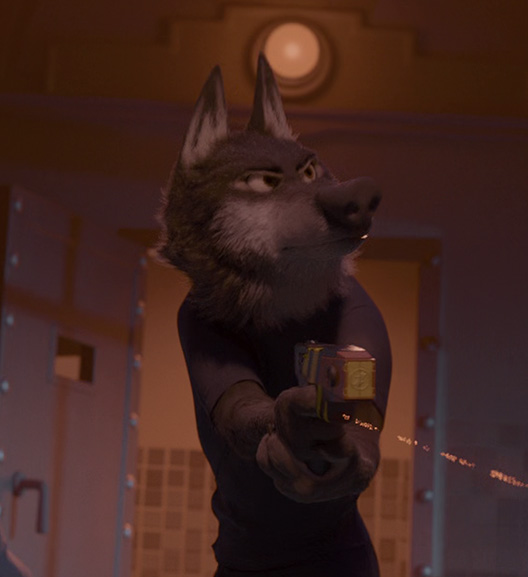
Luther Pawthorne is a gray wolf and one of the four core members of the pack in We Can Fix Pawbert. Originally introduced as a nameless undercover ZSI agent known only as "Officer Luther," he was assigned to protect Pawbert from assassination attempts orchestrated by Milton Lynxley. Over the course of five seasons, Luther evolves from a stoic operative defined by silence and precision into a husband, protector, and emotional partner who learns to speak his feelings aloud.
Luther is a gray wolf and a deep-cover ZSI agent who was assigned to protect Pawbert Lynxley. His quiet devotion and lethal precision anchor We Can Fix Pawbert across all five seasons.
"Always." — Luther's promise to Pawbert, repeated throughout the series
Background
Cliffside Asylum (Zootopia 1 Era)
During the Night Howler crisis depicted in Zootopia, Luther was among the gray wolves assigned to guard Cliffside Asylum under Mayor Leodore Lionheart's orders. The asylum was being used to secretly imprison predators who had gone savage — mammals held without trial, without due process, without public acknowledgment.
Luther followed orders. He did not know the full scope of what Lionheart was doing or why the predators were going savage. He was a young agent executing a classified operation under mayoral authority. When Lionheart was arrested and the asylum's existence became public, Luther's involvement remained classified within ZSI records.
It resurfaces years later, when Lionheart exposes Luther on live television as a "Cliffside wolf." The revelation is designed to destroy Luther's credibility and weaponize public memory of the asylum scandal. For Luther, the exposure forces him to reckon publicly with a period of his career he has never discussed — a time when he followed orders that, in hindsight, enabled wrongful imprisonment.
Early Life
Luther grew up in the Pawthorne family, a wealthy and distinguished gray wolf household. His parents, Maris and Harlan, raised him with unconditional love and acceptance. When Luther came out, Harlan's response was simple acceptance — his son's heart was never a problem to solve. This stands in stark contrast to the Lynxley family's treatment of Pawbert.
Luther joined ZSI at a young age and excelled in undercover operations. His ability to disappear into roles, combined with his tactical precision and combat skills, made him one of the agency's most effective field agents. He labeled his shirts.
Assignment to Pawbert
Luther was assigned to protect Pawbert Lynxley after ZSI intelligence confirmed that Milton Lynxley had placed a kill order on his own son from within prison. Operating under the alias "Officer Luther" with no surname, Luther embedded himself as Pawbert's protector while maintaining his cover as a simple corrections officer.
Personality
Luther is defined by economy — of words, of movement, of emotion. He says what needs to be said and nothing more. In tactical situations, he is precise, lethal, and utterly composed. His combat skills are elite; he single-handedly defeated a six-mammal hit squad during the safehouse breach.
Beneath the operator's discipline lies a capacity for love so intense it frightens him. Luther's greatest vulnerability is Pawbert — the one mammal who can break his composure entirely. His emotional journey across the series is learning that vulnerability is not weakness, that speaking his feelings is not a tactical error.
Key personality traits:
- Tactically precise — Minimal words; every action deliberate
- Fiercely protective — "My pack. MINE." defines his core instinct
- Emotionally guarded — "But for you, I'm learning to speak"
- Domestically competent — Efficient cook (pasta and vegetables); functional around the house
- Physically elite — Even after four cardiac arrests in a single night, returns to full duty
- Deeply loyal — Once committed, absolute; proved he would die for his pack multiple times
Series History
Season 1: The Undercover Agent
In The Weakest Lynx, Luther rides the transport carrying Pawbert to the courthouse, identified by nothing but the name on his badge. When gunmen cripple the van he is out of the passenger door while it is still settling, places all three shooters from cover in the time it takes to look, and kills two — the second in the seconds Judy buys by throwing herself at a professional a hundred pounds heavier. That evening he removes Pawbert's muzzle himself, checks where the straps rubbed the fur raw, tapes a bandage over it, and says protocol requires the restraint but that he does not think Pawbert is what it says he is. Later he stands outside Pawbert's door while the lynx comes apart inside, refusing to intrude or to leave.
In The Blacklist his protection sets terms rather than walls: he refuses to let Pawbert near the Hackjaw raid, then concedes the surveillance van on his own conditions, running comms and calling the breach. When Hackjaw promises Pawbert his death through a body camera, Luther cuts the feed first, and all he offers afterward is that Pawbert did good work; the credit for the intel itself comes later that night, and from Judy. In The Eraser protocol requires the muzzle again; Luther kneels to fit it, tests the strap for pressure, and loosens it after Pawbert insists it is fine. Told nobody has ever cared how it sat, he answers that he is not nobody, and, pressed on why a witness deserves the care, that how mammals are treated matters most for the ones who have done terrible things. He also opens a City Records vault with an unmarked card no patrol officer could carry.
The Architect puts his capabilities beyond deniability. He seeds a fake bail story through contacts faster than any precinct's, builds the gala sting around it, and fills the exit Vesper Coade runs for. His most consequential contribution is the question he asks beforehand: refusing to go back is running from something, so what is Pawbert running toward? Pawbert answers it hours later, turning down Coade's offer of a new identity. Cornered afterward about what he actually is, Luther says he keeps mammals alive and that this is all they need for now.
In Breach, two perimeter sensors drop at once, he names it professional work, and moves the others into a contingency tunnel ZPD never knew existed, refusing to come himself. He promises Pawbert he will find him, then pushes him into the dark. A six-mammal hit squad comes through the door, and he kills all six, at the cost of a gunshot wound to the abdomen, a forearm opened by a knife, a shoulder torn by Oxbow's horn, and broken ribs, then crawls the tunnel toward the exit he promised. Reacher finds him short of the mouth, and his first words ask whether they got out. His heart stops at Site Two, and Neagley refuses to let it stay stopped. Neagley also names what Nick and Judy have circled for weeks: Luther is ZSI, embedded in the ZPD as insurance against departmental leaks, which Bogo confirms later. Awake at last, asked why, Luther answers in one word: an instruction to live. Nick, who has suspected him of everything since the transport, puts a paw out across the cot before he goes, and the argument the two of them have been running privately since that first morning closes in a handshake.
Recovery in Convalescence shows what he will not surrender. He tells Pawbert not to take the choice away from him and, asked why he wanted to make it, defers the answer until the painkillers wear off. Told he will be on his feet in a week, he is walking in two days instead, exactly as he told Nick he would — the first sign of a pattern that will torment his caretakers for years. Past midnight he talks Pawbert down from a nightmare with a grounding exercise learned long ago from someone who understood nightmares, then gives the answer that matters most: yes, Pawbert can be loved, because monsters do not ask the question. In Home, mobile again, he says the assignment stopped being one, that he wants to stay, and that what Pawbert is doing is harder than bargaining or minimizing.
In Clear Skies, when Pawbert comes out and admits a first love vanished after Milton discovered them, Luther tells him he can stop there, that it belongs to Milton, and that shame only works while it is believed. He also breaks the episode, tracing a kiln maker's mark to a shell company and rerouting the seized archive away from a precinct evidence room the network can badge into. Finding Pawbert's own sealed file among it, he confirms the seal was never broken, hands it across, and announces he is going to check the perimeter, taking Nick and Judy with him so Pawbert can burn the photographs alone. In The Vault he leads the raid on Milton's banker, closing it with arithmetic rather than threat: the network is collapsing, and the last one standing takes the fall. Asked that night whether he will still be there after the trial, he says he wants to be.
At Station 118 he and Nick go into a burning building for a witness and carry the accountant out. Bobby Nash tells him the ones who rebuild need somebody to believe in them first; Luther deflects to the job, and the captain lets it stand. At Precinct 99, Rosa asks how many he has killed and accepts "enough" as a complete answer, and when Pawbert hesitates over the Halloween Heist, Luther says joy is not a betrayal of guilt. In The Heist he and Rosa ally at the coffee machine with almost nothing said aloud, and he offers the reframe that unlocks Pawbert's participation: a knife cuts bread or throats without itself changing, only its purpose does. When Pawbert moves on the case near midnight, Luther deliberately declines to run interference. Jake names the four of them a pack that night, and Luther lets it stand.
Stay begins the relationship. Pawbert tells the whole story — Milton's study, the word his father used to name what he was, and the non-answer given years later when he asked what became of Soren — and Luther listens without reaching to smooth it over, then says his father was wrong that love needs repair. He offers the one thing he ever says about his own upbringing: his parents never made him feel that what he wanted was wrong. When Pawbert names what he wants — love without conditions, someone who stays — Luther agrees in a single word, asks permission before touching him, and holds him until dawn. In Soft Launch, Nick and Judy discover them after that first, chaste night and choose not to make it a problem; the relationship turns physical the following evening, his approach procedural in its care: consent at each stage, the terms repeated back. In an ordinary afternoon he tells Pawbert he is allowed to simply exist without being useful.
The middle of the season finds him supporting rather than acting. In Second Chances he stands silent at Pawbert's shoulder through a Precinct 7 interrogation Pawbert recognizes himself in, then reads him afterward as someone who has discovered he is less alone than he assumed. In The Words, Fuzzby gives him one instruction for the facilitated apology session — support, never rescue — and he holds to it for its entire length. Afterward, alone with Pawbert and his mother's photograph, he refuses the easy comfort: he does not know what Lillian would have thought, only that she would have hated what Pawbert did and wanted him to survive it.
Through Quietus he can brief the war room only by secure line, and when the controlled phone rings he runs the grounding exercise he taught Pawbert months earlier. Across I Choose to Stay he keeps a paw on Pawbert's shoulder while Dr. Silris Mawl draws Milton's own language back to the surface — asking rather than asserting, so no prepared counter-script fits — and does not intervene. Asked afterward by Morgan to keep Pawbert safe, he says he can be counted on. It is later, at the window with the operation over and Pawbert thanking him for staying, that Luther answers with the word the rest of the series is built on: "Always." Told Pawbert wants to believe it, he offers to make it practice, and to hold the belief for both of them until Pawbert can take it back.
Green Candle shows what his restraint costs and buys. He has known Pawbert's birthday from the files since the assignment began, and never mentioned it because it was not his to tell. His gift required sign-off from Bogo and Fuzzby: a photograph from the Lynxley manor archives, filed under disposable personal effects, of a small lynx at a birthday table with his mother's arm around him. Pawbert was loved, he says, before Milton made him forget it. That night he admits he breaks too, only quietly. In Mandated Joy, two days before trial, the relationship is fully consummated on Pawbert's initiative and at his pace. They say they love each other for the first time, and Luther admits he has for weeks and withheld it rather than add weight to what Pawbert was carrying.
In Counsel, with the prosecution visibly throwing the case, Luther is first to say aloud that the prosecutor may be helping the defense, then produces an unlisted phone and calls in a favor with Mike Ross, a raccoon who believed him dead. In Moot he delivers what nobody else could get: certified club surveillance of the bribe changing paws. Put on the stand by Harvey playing the defense, he calls the relationship private, says what he saw is unchanged by whom he loves, and rests his credibility on ten years of service and outcomes. Asked what it says about his judgment that he loves a violent criminal, he answers that he sees who mammals are becoming, not only who they were. Harvey's coaching binds them both: no looking across the room, no reaching.
The Trial leaves him in the gallery with nothing to do. The prosecution never calls him — a mostly redacted service file would hand the defense a stage for insinuation — so the cross-examination he drilled for never comes, and he sits through the attacks on Pawbert holding his gaze forward as coached. The verdicts come back guilty on every count, and the family draws life without parole. Pawbert is sentenced to twelve years with conditional release around ten, and to protective custody; the court also strikes the violent predator designation and lifts the muzzle requirement Luther has fitted with his own paws since the first week. Afterward, when Pawbert says the sentence is a long time, Luther answers that he will be at every visit allowed, because he sees who Pawbert is right now, and that mammal is worth waiting for.
Last Morning is his preparation for absence. He corrects Pawbert's framing before dawn — leaving means gone, going means coming back — and when Pawbert tries to hand him an exit he refuses it outright: he does not want an out, and Pawbert is not asking, because the waiting is Luther's own choice. Asked what he will do, he says he will work, cook, get better at the soup Pawbert taught him, and read the books Pawbert recommended, because waiting is not waiting if something is done inside it. He replaces goodbye with "see you Wednesday," and when Pawbert manages one word at the curb — "Always?" — he gives it back. Afterward he coils the birthday fairy lights carefully because they matter, brings Pawbert's soup to Nick and Judy's, and goes home to a dark house he has not slept in for months. His letter reaches Pawbert's cell that first evening: three lines saying he is there, will be there, always.
Season 2: The Operator
A year into Pawbert's sentence, Luther enters Zootopia Correctional Facility as "Rook," a Northern Territories transfer carrying a violent file ZSI aged back seven years. In Rook he tells Pawbert the incidents in it happened; he simply never served time for them. The cover is total, a slouch and a dulled stare he holds through the yard attack that drops three inmates in fifteen seconds. It comes apart in stages. The first night he passes on the bug-sweep schedule and lets Pawbert see who is underneath, but forbids contact. He sweeps the cell again while Pawbert is at therapy, and only on the second night does he reach down from the upper bunk to the paw reaching up — their first contact in twelve months, held until morning. Asked what Pawbert is, if not an asset, he answers with a single word: everything.
Protective Custody measures the cost. He breaks a honey badger's wrist over a shiv at Pawbert's prep station and tells the guards he slipped. In the shower block four attackers come through a door someone opened for them; his hindpaw skids on wet tile, a ram catches his hip, and a cougar goes for his throat until Pawbert throws himself into the strike and redirects it into three claw wounds across Luther's ribs. What answers is a snarl that strips the persona off him. Afterward, when Pawbert argues he should have been allowed to take the risk, Luther refuses the premise: he will always put himself between Pawbert and the blade, and it is not open to discussion. In a camera window Pawbert timed himself, they lie pressed together on the narrow bunk and Luther says he has loved him since Pawbert turned down Vesper Coade's offer of a new identity — not because the refusal was for him, but because it wasn't.
The dawn assault in Extraction ends the cover. Every cell door releases at once and Rook is gone; Luther fights through the block past a jackal, a wolverine and an armed arctic wolf, catching a blade on his forearm rather than his throat, and arms Pawbert with a fallen pistol and the basics of how to fire it. Cornered in a maintenance dead end, they are saved when Reacher's team blows out the exterior wall. At the last choke point Warden Hartwell holds the corridor and dies for it, warning with his final breaths that the attackers mapped the whole facility, not just the route to one cell; Luther's instruction to the surviving guard is that the city be told who held the corridor. He resumes the Rook posture for a corridor of watching inmates and sheds it once the secure door seals. At Site Two he kisses Pawbert for the first time in a year and admits the year of watching through bars was the hardest thing he has done. When Pawbert gropes for a name for what the four of them have become, Luther supplies it: "It's pack."
In Safehouse the temporary ink washes away while Pawbert traces the fading lines, and Luther separates the mask from the mammal — Rook is a costume, and he does not want to be wanted for it. Asked by Judy how he is holding up, he offers the only answer he will give: Pawbert is alive, and nothing else counts. When Agent Ross demands the debriefs begin at once, Luther stalls between the operative who grasps the urgency and the partner counting how few days of freedom Pawbert has had, until Pawbert settles it. The Vacuum formalizes his position — attached to Pawbert's protective detail with his ZSI status classified and the ZPD cover intact, one mask traded for another. He backs Pawbert against the room, carrying Hartwell's dying words into the briefing to force Ross to reopen the reconnaissance theory. At home he cooks pasta and vegetables.
When a three-in-the-morning flashback puts Pawbert on the kitchen floor in Unconditional, Luther steps around the broken glass and sits beside him without touching until Pawbert reaches out. In Fuzzby's session he begins by disclaiming standing — he was not the victim and has nothing to forgive the way Nick and Judy do — then forgives Pawbert anyway for what Pawbert did to himself: treating himself as beyond repair, waiting to be found not worth it. Loving him was never a mistake. The Collateral crossover puts him alongside Station 118 at a bombed substation, where he brings Pawbert in as a consultant and carries the finding to Ross. That night he names what separates Pawbert from the family that built him: Pawbert cares so much it nearly broke him, and that is what makes him worth saving.
Luther objects to the ask in The Uncle and goes with Pawbert anyway, to the Lynxley manor and then to a prison where an inmate's rights leave him behind one-way glass while Milton works. He is waiting in the corridor and catches Pawbert before he hits the floor. That evening he reframes the thing Pawbert is ashamed of wanting: every child is supposed to have a parent who loves them. Blood Relations puts him in tactical gear for a raid on a Beaverdam complex, where he pursues Javier Croft to a loading dock and misses him by inches. Reviewing the footage, Clawrence reads him accurately: loyal to a fault, a wolf who will step between the nephew and any threat without hesitating.
In Quiet Room he wakes the instant Pawbert shifts, a decade of field work having made deep sleep impossible, and strips his sidearm twice because his paws need occupying. A second Milton confrontation in The Cartographer tests him harder: he watches with his paw flat against the observation glass, and when Prentiss observes that Pawbert is holding, he says nothing at all. Rossi catches his arm at the door afterward and teaches him the harder half of protection — Pawbert has to walk out under his own power. After Garcia surfaces a file listing Soren as relocated rather than dead, Luther commits that night to finding him. In Return Address he tells Pawbert that Soren predates him and threatens nothing, waits outside the door through the call, opens his arms without a word, and names the distinction that holds: hurting is not the same as being destroyed.
The Precinct 99 case in Nine-Nine and the heist-turned-security-audit of The Audit give him an ally in Rosa, with whom he forms a partnership on almost no conversation at all — he finds the ways into the safehouse, she gets through them, and neither needs to explain anything to the other. He works the resulting list down across the following week in Waiting Game and closes everything on it but the kitchen window, a pane too wide for any fix short of new construction. He joins Precinct 7's operation at Mole Harbor the same night, and tells Pawbert that his inability to predict Clawrence is evidence of the difference between them, not a failure.
He is awake before the alerts in The Wall and reaches the bombed tunnel while the shooters still hold it, working alongside Reacher's team until the attacking unit collapses; that night he anchors Pawbert against the name he carries, as the Lynxley standing with them and fighting it. The security work pays out hours later in Foxhole, when a team hits the safehouse before dawn — the new lock holds the roof, the reinforced frame holds the back door, the corrected camera shows them coming, and the attackers have nowhere left to enter but the window Luther could not fix. Luther drops three of them in twelve seconds and drives the pack out through the garage. Ordered afterward to the Rainforest-Savanna junction, his answer is a flat refusal, and only Nick's reasoning and Pawbert's insistence move him. Told he will come back, he says "Always."
Emergency traffic from Precinct 1 reaches that junction in Tempest, and Luther is running for a vehicle ahead of the decision, telling Reacher to hold the post without him. He arrives to find Pawbert gone, takes Nick by the collar over it, then turns his grief into the only lead available. In a prison visiting room, rumpled and dust-streaked, paws shaking, more than a day without sleep, he asks Cattrick for help and gets naivety thrown back — until he says the thing that ends the negotiation: "Pawbert is the best mammal I've ever known." Cattrick names what he is hearing, and years of cover and careful professionalism come off in front of a Lynxley. Cattrick gives him the Central Weather Interface and an instruction he was never taught how to give — keep him safe, if he can.
The Crown sends him up a stairwell alone toward a room he has decided to reach first, working through what has changed: he loved Pawbert across a year of glass, but knowing and having are different, and now he has everything to lose. He drops through a ceiling vent and finds no clean shot; when Clawrence fires anyway, Luther tackles Pawbert down and the round takes the lynx's shoulder. He presses both paws to the wound, demands Pawbert stay with him, and refuses to be separated from the stretcher or the ambulance. Alone with an unconscious Pawbert, he says what he cannot say awake — that Pawbert chose right, that his mother would be proud.
Grief arrives differently in Aftermath, once Pawbert accepts that he still owes the sentence. This is not the desperation Cattrick saw; Luther braces against the kitchen counter and comes apart without words, in front of a pack that has never seen him do it. What he manages is an inventory — a year of glass, then Pawbert out and within reach, then taken, then shot, then bleeding on his paws, and now to be lost again. Pawbert holds him one-armed and tells him the strongest available act is sometimes to feel it. Found Family answers with a birthday: Luther cooks, steadies him in the Sahara Square market, and offers a reframe — perhaps it is not about making up for the past but about what he chooses next. His gift is a green notebook embossed STAY, with ALWAYS written inside in his own paw.
He testifies at the clemency hearing in The Ask as Officer Luther of the ZPD, describing a mammal who refused a city's infrastructure at gunpoint and took a bullet for it — not a criminal working an angle, but someone who has decided who he wants to be. Afterward he admits the public version costs him less than the private one: keeping Pawbert a secret is harder, and he would wait longer if he had to. Last Day gives him the decommissioning of the safehouse and a last night in a stripped bedroom, where he settles what home means — wherever they end up — and offers the only arithmetic available: one year, then they never say goodbye again. In Clean Slate they kiss openly at the curb and replace the goodbye with a Wednesday, and Luther goes back to a house with all the right furniture and none of the right sounds. He carries in the one thing he kept from the safehouse, Pawbert's soup pot, sets it on his stove, and means to keep practicing the recipe until it is not needed.
Season 3: Identity Exposure
Four months into Pawbert's return to Zootopia Correctional Facility, Luther is three weeks into a money trace and calling the breach on a Canal District warehouse. The raid with Reacher's team takes six armed mammals without a fatality and turns up transit authority routing kits beside prison bypass nodes — hardware that overrides door locks, cameras and communications — shipped to ZCF on a contract whose contractor does not exist. In Licence to Claw, Director Ramshorn asks for eyes inside and Luther accepts before the question finishes; the scope is investigation, and Ramshorn says twice that it is not a rescue. He does not warn Nick or Judy; a call would leave a log. The last thing he told Pawbert before going dark was that he would come back.
He goes in as Rook, the cover he ran during the Clawrence operation, telling the officer who takes his weapons that before Rook he was nobody. One detail is his own: he has the temporary tattoos moved, because Pawbert traced the originals a year earlier and a wrong configuration will make him doubt rather than confirm. Inside, Rook puts his cellmate on his knees within seconds and refuses Stripes's offer of gang work in front of the mess hall. He maps a courier chain from inmate to bought guard to outside supplier, and drops his first report in the chapel. He also sees Pawbert cross the yard under escort, leaner than memory, head up, and lets his paws hang loose rather than give any sign he knows the lynx.
The discipline costs more each time. A fire in the protective custody wing routes displaced inmates through general population in Worth Clawing For, and Pawbert passes within arm's reach of Luther's cell while Luther turns the pages of a novel he once gave him. He does not look up. What stays with him afterward is Pawbert's eyes, scanning strange faces for threats rather than searching them for him — the thing Luther cannot fix from a bunk.
In Tripwire he has his cowed cellmate Krazek broker a second approach to Stripes and takes the seat he publicly refused, which puts him in the yard when the crew sweeps the displaced inmates. Pawbert recognizes his build, stares at the wrong tattoos, and begs him silently to look. Luther gives him a stranger's contempt and a shove that puts him in the dust, and refuses himself the comfortable reason that night: he did it because he is good at it, because he can look at the mammal he loves and let nothing reach his face, and because he will do it again tomorrow. Following the courier into the service corridors, he learns the rest — bypass nodes already live on two blocks, a cache staged in the sub-basement, the fire set deliberately as cover, and the assessment behind it bought to keep the protected inmates in population. Pawbert is exposed by design, and the target is someone in protective custody.
Claw and Present Danger gives him the answer too late. He finds demolition charges stacked in the sub-basement, and learns the rest are already placed. Four of the crew corner him; he fights clear, but the last one down gets a radio call out, and the attack fires early because of him. He surfaces bloodied and in prison grays, and every guard he begs sees what Rook was built to show them. Then the charges blow. He finds Pawbert standing still in the panic and, asked whether it is really him, gives the word the two of them have lived on: "Always." He shields Pawbert from a shattering window with his body and looks up at a thirty-foot hole in the wall. Cattrick tells him on the way out that he kept his brother safe, and Luther lets him and Kitty go before Officer Kett vouches for him to armed guards. From the lip of the breach they watch Lionheart board a transit convoy — the guest of honor from a sealed wing Pawbert lived beside and never saw.
In Dead or Alive the pursuit strips him to method. He hauls a civilian out of a sedan, tells him plainly that this is a carjacking, and tracks the convoy into the transit tunnels on foot, pinning a maintenance worker to a wall for a direction and taking a rookie officer's sidearm off him — costs he adds to a tally he stopped counting years ago. At Dead End Station he catches the rear railing of Lionheart's departing train and pulls Pawbert aboard by the forearm.
Twelve cars stand between them and Lionheart. Across No Time to Die Luther works forward, silent efficiency degrading into brawling as the damage accumulates — cracked ribs, a knife across his arm, claws down his chest, a baton to the temple. Car 6 holds eight of Lionheart's best and nearly ends him; a taser puts him down until Pawbert takes it off the coyote wielding it. When the last defender locks the door ahead, his legs fold and he says the thing he never says: that he cannot. Stalled at the halfway point, Pawbert presses him on why this has stopped being a job; Luther calls it personal and promises the rest later.
He pays that promise in A Wanted Mammal, though not on his own terms. He gets into City Hall through an unsecured service door and fights up three floors on nothing, watching Pawbert hold his own and telling him so. A gray wolf in ZSI tactical gear gives a badge number and division that are both real, clears the press room door with him, then turns a weapon on him inside it and shifts the aim to Pawbert, ending the standoff. On his knees, on live television, Luther hears Lionheart name him as one of the elite wolf guards who dragged mammals to Cliffside Asylum four years earlier, and confirms it. When Nick and Judy collapse the manufactured rally outside and the traitor's attention drifts, Luther takes his weapon and clears most of the room before his body quits.
On the steps he gives Pawbert the whole of it: four years of shame, and that he never asked whether the mammals he took were innocent. Pawbert tells him he is loved more than anything he could ever do wrong. Ramshorn ends his undercover career the next morning — the city has seen his face, the Special Activities Division is being dismantled, every operation he ran will be reviewed — and holds out an off-field, visible posting as ZSI-ZPD liaison once the reviews clear. Asked whether it was worth it, Luther says yes, and is told the confession took courage. At the visitation, with the pack promising to be there, Luther gives Pawbert the word again — the only one he has ever needed for it — and Pawbert reaches through the gap in the partition for his paw. Between them they set the remaining eight months down as something they can hold: finite.
Season 4: Domestic Life
In Release, Luther spends the night before Pawbert's release awake, eight months into a desk-bound liaison posting. He abandons his own plan and waits in the ZCF lot long before processing opens; when the door releases Pawbert into the morning, he crosses the asphalt with his composure gone. Pawbert's Sahara Square tent has been stripped by years of weather, and in the wreck of it Luther asks him to come home instead. Home is a three-story house in the Meadowlands, and with it the surname he never volunteered — Pawthorne, of the foundation and the hospital wing — hidden because he did not want it deciding how Pawbert saw him. He chose law enforcement to protect mammals, undercover work to matter, and Pawbert because the lynx is the first real thing he has ever had. Asked that night how long any of it lasts, he answers with the word the two of them live on: "Always."
The days that follow make him the pack's quartermaster. Through Unboxed he walks Pawbert through the reentry paperwork and buys his new phone outright, no ledger attached. In Transfer he asks Director Ramshorn to move his liaison office to Precinct 1, partly for the shorter commute from the estate. Ramshorn calls it going domestic, approves it, and tells him to let Pawbert take care of him too. Luther then asks Pawbert, before anyone else, whether Nick and Judy should move in. He has already built the thing Pawbert's supervision requires: a coded storage room for three officers' weapons and separately locked ammunition, a door he will never open. When the parole inspection calls the arrangement irregular, Luther answers that the only irregular thing about it is that mammals care about Pawbert. Afterward, with Pawbert on the foyer floor convinced he has made a home into a checkpoint, Luther tells him nobody here charges him for anything, and names the pack: "We're ours."
Open Enrollment opens him up in the gentlest possible way. He drives Pawbert to campus, admits to a Columbear degree in economics and political science, and buffers a tabloid ambush with the reminder that only the next thing is Pawbert's to control. Then his parents let themselves into the house. Maris and Harlan absorb Pawbert without conditions and hand Nick a childhood nickname — Lute — along with the shirts labeled at four and the family money he refused after eighteen and redirected anonymously to the museum fund. Harlan supplies the anchor: when Luther came out at fifteen, the same week he settled on ZSI, his father told him his heart was not a problem to solve. Watching them fold Pawbert in, Luther admits he is still learning what that looks like.
Visibility is the cost of the new job. In Liaison, Agent Pawthorne takes a windowless office that Clawhauser has furnished with a lamp and a glittered banner, and Luther names the cost himself on the drive in: fifteen years of being whoever the operation needed. In his office afterwards, Chief Bogo tells him he has become a symbol — the agent exposed protecting a convicted felon. Luther accepts the terms and refuses the premise that Pawbert is anyone's business. Nick names the part that actually frightens him, which is not the work but the being known, and that evening Luther comes home to a feast Pawbert cooked to outrun a panic attack and crosses the kitchen without a word.
He is also capable of joy on purpose. Day Pass has him building a Deersneyland itinerary within minutes, insisting fun can be optimized, and threatening Nick's phone over the light-up antlers Judy puts on him. He laughs aloud at Bogo being towed toward the teacups, and holds Pawbert through the fireworks with the promise repeated into the noise. Editorial support is his other register: in Transfer Credit he sends Pawbert back to write as a mammal who survived rather than one still held, then makes him submit before doubt returns. When the acceptance lands in The Letter he holds on until days of carried worry go out of him, then tells Pawbert he was always capable of more than the Lynxleys let him believe.
Letting go is harder. He cooks breakfast before the first day of classes in First Day and hands Pawbert the frame that carries him through the semester — one class at a time — then holds his paw the whole way home after a lecture on Reptile Ravine hollows him out. In Solo Shift the wolf who has held covers for weeks without slipping cannot quite release him for a solo commute, and the goodbye runs long past the schedule; that evening he studies the jade plant Pawbert bought himself and agrees that yes, this is what he is supposed to be doing.
The press siege in Front Lawn turns him tactical. He reverses out through the crowd, takes an overgrown service road his parents installed decades earlier, and texts his mother for the gate code. Inside he separates truth from story for Pawbert, and once Maris and Harlan have dismantled the coverage by telephone, tells him to get used to being protected. Charter makes it permanent. Told the trial is over, Luther says he had been waiting for them to drop the word, then hands out four key rings with engraved tags — not planned, he corrects, but hoped for. He buys Pawbert a bookshelf by asking only whether he wants it, contributes "closed file" to the pack's written rules, and points at the keys on their hooks as evidence that mammals keep showing up.
He does not treat Pawbert's independence as a threat. In Tips he names what the coffee-shop job is — agency — and says outright that it costs him nothing, then spends the night on unforgivable espresso puns before admitting, drowsily, that he is proud. Case Study gives him the reframe that steadies Nick and Judy after a classroom dissects their relationship: assumptions describe the mammals holding them. His phrasing about coordination rather than services sends Pawbert scrambling for a napkin, and that night Pawbert speaks their promise first for the first time. Luther goes still before he gives it back.
A three-in-the-morning call in Radio Silence takes him out of the house with a duffel that has sat packed on a closet shelf all along. He gives Pawbert the charter phrase and nothing else, promises he always comes back, and texts Nick and Judy to look after him. Incoming shows what he went to: a weapons compound worked alongside Reacher's team, and an upper floor that fails under the fight. Dug out of the rubble repeating Pawbert's name, he reaches the hospital with three broken ribs, a bruised spine, a concussion and lacerations, having already tried to discharge himself twice before signing out against medical advice. That night Pawbert reads him the letter written into the STAY notebook during the silence, and Luther says he needs to hear it more than he needs sleep.
Recovery is the worst assignment of his life. The Chart logs the escape attempts, the fall he reclassifies as a hydration mission, and the admission underneath — that he does not know how to do nothing, and hates being useless. He needs Pawbert's help in the bathroom and takes it. Nick answers with poster board and categories for wolf stubbornness and unauthorized hygiene; Luther threatens to destroy it, and Nick laminates it. In The Apron Incident he pushes Pawbert out to his own friends: a life has to be more than the two of them, and he is proud there are mammals in it who are not him. Pawbert comes home in the borrowed Snarlbucks apron and little else, and Luther's first real laugh since the collapse comes up despite his ribs.
Two months on, Operational Surprise returns him to duty and loses his birthday to Clawhauser's enthusiasm. He reads the party out of Nick's invented cheese hobby and the household's purchasing patterns, then walks in through the service entrance behind everyone. Handed The Chart in a mahogany frame, something unguarded crosses his face; he says he has nothing left to wish for, announces he will hang it in his ZPD office where nobody will understand it, and tells Pawbert on the patio that this is the first birthday he has wanted to remember. Routine settles into the ordinary — healed, cooking most of the pack's meals now, studying the painting Pawbert brings home with a briefing officer's attention before calling it beautiful.
Map Day is his own disclosure. He has spent weeks building a color-coded itinerary through his history: a Sahara Square spice market where an elderly fennec vendor greets the Pawthorne boy, a tea house whose owner remembers a teenager hiding in its dark corner, and a Tundratown ice field he has brought no one else to, where at fifteen he decided three things — to serve something that mattered instead of the family business, to protect the mammals he loved whatever it cost, and never to let the name define him. Undercover work, he says, meant being nobody long enough to forget what somebody felt like, and Pawbert is why he remembered. Told he is now part of the map, he corrects it: Pawbert is the destination.
The season closes in increments. He says he is proud of Pawbert twice more — when the semester ends in Full Circle, and when the grades post in From Now On, where a musical he missed under Nocturnal District cover draws out both halves of him. He names its failure precisely, a mammal chasing a definition of success that was never his, then admits he expects to lose this every day and would still rather be frightened here than anywhere else. In Loud and Determined he makes Pawbert's birthday pancakes and watches him eat with an attention that no longer resembles surveillance. Maris's cinnamon rolls come from Lillian's recipe, rebuilt from details Luther supplied and glazed by him. Asked to let Pawbert lead in bed for the first time, he simply tells him to. Afterward he gives Pawbert the reading of Lillian he cannot give himself: she left enough behind for him to find his way back, because she raised him loud and determined.
Season 5: The Icener Crisis
Two years of quiet end in a hallway. Luther takes a ZSI call during movie night in Golden Age and learns the Vladifrostok station has gone dark, three operatives missing and presumed dead. Watching his pack afterward, he feels not the operational fear he was trained to manage but the dread of a mammal with everything to lose. Barred from Pawbert's final supervision appointment earlier that day, he had waited in the lobby and folded him into a wordless embrace when the certificate came out; that evening he admits the gun room code is Pawbert's birthday, the monthly rotation the supervision terms required long since abandoned because Nick kept forgetting the new ones. Pattern Recognition installs him in the Crisis Coordination Center as ZSI's bridge to the ZPD, descending past a memorial wall where a black ribbon hangs over the division he once served.
He runs the Canal District warehouse raid in Soft Target, where it takes four of them to put Roskova down; all she gives him in interrogation is a warning about what is already in place. When Pawbert agrees to face Milton for the name behind the network, Luther insists on being present, and the night before he answers Pawbert's fear by listing what his fourteen-year-old self never had: a pack outside the door, six years of growth, and Luther himself, the whole time. He spends the interview at the observation window in Activation, unable to take his paw off the glass, and is first to reach for Pawbert when it ends.
The tempo escalates through Traceback and Fieldwork, where he leads breaches on mothballed Lynxley depots, loses Roskova into a Tundratown market crowd, and splits his own force mid-operation to kill an attack running across the city. At three in the morning in his kitchen he tells Pawbert why they will win: each other. The attempt to murder a retired engineer in The Network produces his sharpest read of the season — the leak is not a watcher but the credentials themselves, and everything ZSI files should be assumed read. When Judy proposes borrowing a precinct nobody is watching, Luther vouches for Rosa and Precinct 99 without hesitating.
The Halloween job in The Job pairs him with Rosa on the camera cut, two professionals working a dark basement on paw signals; what they take fixes the arrival window for Icener's ship. Holt tells him privately that the Nine-Nine did the work but Luther supplied the framework and the trust that let them function, and Luther has no idea what to do with it. Upstairs afterward he and Pawbert trade the private form of their promise, "Always, Paw" answered with "Always, Lute." In Departure Rosa's parting condition is that she takes point next time; Holt's is heavier — guard what you have built here — and Luther says he intends to.
Misdirection takes it apart. When the weather walls turn on the city before dawn, Luther cups Pawbert's face in both paws and extracts a promise to stay home, then abandons the car in gridlock and runs the rest of the way past mammals he cannot stop for. Hours later, learning Pawbert has broken that promise to run a shelter, his voice cracks over the phone: he has been counting on one mammal being safe. Pawbert tells him he is not asking to be protected. The apology comes in a descending elevator in Climate Control, paws shaking and composure gone — he has been frightened all day, and the terror was never the death toll but his own inability to reach Pawbert. He locks it back down before the doors open, and finds Pawbert's paw first.
He takes point on the Frostbite Processing assault in The Message, absorbs a round on his vest and keeps pushing, and holds the corridor while O'Brian burns Icener's surface network out of existence. Retaliation lands within a day: a bomb at Precinct 1 that kills three officers and ends Bogo's field career, learned down a phone line. In Strike he turns from the window with the operator's composure back in place and offers the pack the hardest available reading: those officers died because ZSI won, and that is a reason to finish it rather than stop. Pressed to say it to the dead, he answers that he would if he could.
Volkov's interrogation in Profile surfaces The Root. In Cost of Entry he leads one of three simultaneous raids on candidate sites and finds his own empty, having refused in briefing to split up partners who trust each other. Then Inferno breaks him. He works the Rainforest District fire alongside Station 118 for hours, soot-black and paws burned, and comes out of the smoke to learn Pawbert ran into a burning building for a friend. What follows is a howl, then his legs going, then sobbing in the ash in front of a staging area that has never seen him falter. Pawbert reaches him first, Nick and Judy flank him, and Athena tells him Bobby wore that look every time she went out on a call. That night Pawbert tells him he is not twenty-four anymore and gets to choose his own risks. Luther says nothing, but something in his face gives.
All Paws is a suicide assault on ZSI headquarters, fought in a lobby where every operative Luther drops is replaced by another reaching a support column. The charges go, the building tilts, and the stairwell down to where Pawbert is working collapses. Shaw physically stops him from going at it anyway — they cannot help anyone dead. A second collapse pins him until search teams dig him out, and he breaks away from the medics before they finish clearing him. When he finds Pawbert in the crowd he holds him hard enough to hurt, saying he could not get through.
In The Godfather he offers to go with Pawbert to Reptile Ravine and is refused; he accepts the reasoning and sets one condition: constant contact. Reacher's team returns from Vladifrostok that afternoon, and Luther waves their intelligence aside for what he actually needs — shooters on the northern approach. He holds the eastern line through the night of Tundratown Requiem until word comes that the Ravine, not Tundratown, was always the target. Ordered to stand down, he refuses on the radio: Costa can hold the sector, because Luther's partner is in the Ravine. He leads the polar bears Mr. Big has sent under Raymond through the streets toward a drainage grate the thermal feeds have marked with survivors, and meets Roskova coming the other way. He kills her at close quarters, the recognition passing between them in that last second entirely mutual.
Without Options costs him everything at once. He brokers Milton's extraction by phone and brings Pawbert home to a mansion covered by a single agent; Shaw dies buying them seconds. Luther gets Pawbert behind the gun room door, arms him, and gives an order that is not open to discussion — if they get through, he stays inside. He holds the hallway alone, and it is not enough. Beaten past standing and dragged bleeding across his own hallway floor, he manages the only thing left and tells Pawbert not to open the door. Pawbert opens it anyway, and the last thing Luther says before they are both taken is his name.
Underground in Final Position, Luther is the leverage — held on his knees and beaten each time Pawbert refuses, and refusing to make a sound. With a pistol at his head he argues instead: he loves Pawbert, he is proud of him, and he needs to be let go, because those codes in Icener's paws end everyone, not just him. A round through the thigh finally tears a howl out of him, and he says it again anyway. When the rescue breaches and Icener drags Pawbert into a maintenance tunnel, Luther takes a weapon off one of the dead and follows. Pawbert's teeth in Icener's wrist make the opening. Luther takes it, and standing over the crippled polar bear he reads out the bill — Shaw, thousands of civilians, a home invaded, a family taken — before the shot. "My pack. MINE." Then his eyes roll back, and Nick starts compressions on the tunnel floor.
He reaches Zootopia General having already coded twice, and codes twice more on the table before Dr. Bailey, the surgeon who patched him up after the building collapse, returns him for the last time in Complacency. He surfaces through the sedation mid-confession and answers at once: refusing Icener made Pawbert the strongest mammal he knows, and the request to be let go was only ever an attempt to spare him the choice. Recovery is documented against his will — Nick's Chart 2.0 closes at twelve escape attempts, four sedation threats, and seven physical restraints by Pawbert. Luther's own contribution to the aftermath is the news that The Root has been filled with concrete and sealed for good.
Cleared for full duty three months after surgery, he goes home and proposes the same day. In Golden Again Pawbert walks into a foyer of fairy lights to find Luther kneeling, saying what he has spent months rehearsing: he spent his life being a weapon, the one-mammal army who needed nothing, and thought that was strength when it was only lonely. The ring is silver and the engraving reads "Stay." The moment is then undercut entirely — Nick proposed to Judy the same weekend, and when he declares a double wedding, Luther's whole contribution is a long pause and then a grudging agreement, which Nick refuses to accept as anything short of a declaration of love. The night before the ceremony he tells Pawbert he is not nervous, only grateful; he has been ready since the tunnel.
Always finds him losing a fight with his tie, a wolf who has faced assassins and torture and cannot make one knot sit right. Nick thanks him for staying when staying was hard, Luther says Pawbert made it easy, and Nick corrects him — he did not, and that is exactly why it counts. Slipping into the wrong suite beforehand, he learns Pawbert means to shed the Lynxley name and the two of them come apart laughing at the result, "Pawbert Pawthorne." His vows admit he is not good at words and is learning to speak regardless, and promise to stay through every nightmare, every doubt, every day Pawbert does not believe he is enough. At the reception he deflects Holt's praise — he only provided the house — and is told not to undersell it, while the family's old groundskeeper and housekeeper hand Nick a childhood he will never live down. The series closes on the two of them tangled together with Lillian's green sweater carried up beside them, matching bands engraved STAY, and one last exchange: "Always?" "Always, Paw." Three weeks after the wedding, on honeymoon in Pawlawan, he is caught running a threat assessment on a beach and concedes that the department can survive two weeks without them — though he has still noticed that the island keeps no extradition treaty and asks arrivals nothing about their pasts.
W-Series
In "Bunnyburrow" he freezes solid when the Hopps kits climb him, and Stu walks him onto the porch to say that Pawbert belongs to the family now. In "Closed File" a classified file he can neither discuss nor put down leaves him in the Precinct 1 lot with the engine running for an hour, and he cries at his own kitchen table. In "Under the Weather" a canine flu has him insisting he is fine while gripping a counter, until Bogo sends him home. In "Recruit Grumpiski" he goes undercover at the Academy for two weeks as "Bark Grumpiski," loses sparring matches on purpose, and builds the case that ends the harassment of red fox cadet Miles Mobian; he tells Ralph Packard that what changed him was being seen when he was not performing.
In "The Prodigal Son" he hands Nick his car keys and asks nothing. "SSA" establishes his ZSI rank and the coordination doctrine he has been writing since Icener; Prentiss brings Costa's offer of a Unit Chief post over the Crisis Coordination Center, he refuses it as he has three times before, and he promises Pawbert the next such decision comes home first. In "Nighthowler" a modified compound hits him during a warehouse raid and he spends twelve hours feral, running the city on all fours because he is trying to get home; what reaches him is Pawbert's voice and a green sweater.
In "The Shape of It" he says his recurring nightmare aloud for the first time: a room with a bomb, one door left, and behind it someone he cannot reach, who over the years became Pawbert. "Deep End" exposes a longer secret, that he cannot swim and has routed a career around water; he finishes a lap anyway. In "Pawthorne" a burglary at his parents' estate, which Maris tried to keep from him, has him tell her that managing his reaction is not protecting him. Tropical heat degrades him across the three days of "Coup".
In "Zooniversal Studios" his tail betrays him at a Scooby-Doo meet-and-greet, and he hugs Nick unprompted. He starts reading chocolate labels after the poisoning case in "Bitter", and in "Headcount" he loses his study to a kit's fort and wears a pillowcase cape for two days. "Scare Tactics" is his operation: three months of preparation, Packard and Mobian and Jack Savage borrowed back out of the Academy class he trained beside, tracked weather and a fabricated family ghost, all to terrify Nick in his own house.
In "The Guest List" a retired mayor brushes against something sealed from long before he met Pawbert, and he goes still enough that Pawbert invents an exit. In "Touch Grass" he answers a stolen-clothes prank by sprinting to a store for ice. In "Diplomatic Immunity" a Vladifrostok infrastructure chief shows him that his doctrine stops at ninety-six hours and says nothing about the second year, and he rewrites the section under the aurora. In "The Call" a translator fault reads as a citywide weather-wall cascade, and he runs the plan he wrote from the room whose chair he once refused, up to a call for demolition charges under Tundratown that Pawbert's phone call and O'Brian's raw feed stop at a count of two; he lets ZSI walk Nick past him in restraints, and goes to his mother's door instead of home.
In "Porch Test" he declines the one question about the lighthouse, and Robin Scherbatsky writes the refusal down. In "Good Wolf" he tells the pack the inside of the Cliffside operation, and learns the howl he blamed on a gate wolf was Judy's. In "Deersneyland II" he uses the Pawthorne name for the first time, and one call gets Nick Club 33 and the Grand Floridian. In "The Wrong Mammal" at a grimy window he brings his raised paw down flat and holds, because he trusts Pawbert over his training. In "Souls on Board" he finds Perkins and Botasky alive and, crouched in the doorway, says both names out loud. Flying home with both pilots down, he ditches the burning charter in Sandy Cove, then says to Pawbert's face the word he kept off the cockpit recorder.
In "Ridealong" he drives the pack home from the precinct and offers to sign the permission slip Pawbert says he needs to get a lunch like the one Judy packed for her ridealong guest. In "Express Lane" renewing his driver's license costs him a day at a DMV staffed by sloths and a software update that closes the counter, and ends with a ride from Flash, whom he rates above every professional who has driven him.
What If
The What-If episodes are alternate timelines and do not affect the main continuity.
In "What If... the Weakest Lynx Chose Differently?", Officer Luther appears only at the end, arriving to escort a houseful of mammals to processing and crossing the room to pull Pawbert to his feet. In "What If... Nothing Was True?" he works a murder tied to a hidden order, catches a spring-loaded blade by hearing alone, and ends up in a white void being recruited by the mammal he just killed. In "What If... a Guardian Fell from the Sky?" he covers for the crash-landed Rocket with ZSI and reaches for a husband who is already dissolving.
Key Relationships
Pawbert Pawthorne
Pawbert is Luther's husband and the center of his world. Their relationship evolves from protector-and-asset to the deepest partnership in the series. Luther calls Pawbert "Paw" — the name is his alone to use, though not restricted to private ones — a nickname originally belonging to Soren, which Luther uses to honor that history while creating new meaning. Luther's ring is engraved "Stay" — his promise made permanent.
Nick Wilde
Nick and Luther share a predator-to-predator understanding. Their bond is built on mutual respect, shared humor, and an unspoken agreement to protect their partners at any cost. Nick is fellow pack — a brother.
Judy Hopps
Luther respects Judy's moral clarity and determination. They share an understanding of what it means to love someone across species lines and face public scrutiny for it.
Maris and Harlan Pawthorne
Luther's parents accepted him fully — his career, his sexuality, his choices. Their unconditional love is the template for what Luther tries to give Pawbert. Maris is sharp and directly protective; Harlan is warm and quietly powerful.
Jack Reacher
Reacher's team represents Luther's professional identity — operators who speak his language of tactical precision and economy. Their working relationship spans the entire series, from the S01E05 extraction through the final assault on Icener's position.
Chief Bogo
Bogo respects Luther's competence and gives him appropriate latitude. Their relationship is professional but genuine.
Key Phrases
| Phrase | Origin | Significance |
|---|---|---|
| "Always" | S01E18 | His binding promise to Pawbert, and the series' final word |
| "My pack. MINE." | S05E21 | Said while killing Icener; defines his protective fury |
| "It's pack." | S02E03 | First use of the word to describe the four of them |
| "Pawbert is the best mammal I've ever known" | S02E18 | Said to Cattrick during the siege; his most vulnerable declaration |
| "Always, Paw" / "Always, Lute" | S05E08 | Intimate nicknames; private evolution of the "Always" promise |
| "Eight months. That's all. And then you're out. For good." | S03E08 | The promise he gives Pawbert on the City Hall steps after his exposure |
| "Stay" | Ring engraving | The promise made permanent in metal |
Trivia
- His proposal to Pawbert involved a Pinfurrest board he will deny the existence of forever.
- His birthday of May 17 is shared with Jack Ryan from Tom Clancy's novels.