Pawbert Pawthorne
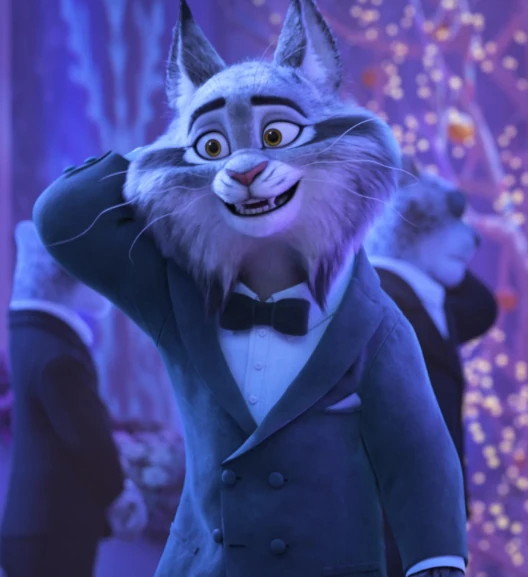
Pawbert Pawthorne (née Lynxley) is a Canada lynx and the protagonist of We Can Fix Pawbert. He is the youngest son of Milton Lynxley, formerly of the powerful Lynxley crime family. After his role as a secondary antagonist in Zootopia 2 — where he attempted to murder Judy Hopps, Nick Wilde, Nibbles Maplestick, and Gary De'Snake — the series follows his journey from traumatized villain to confident social worker, husband, and member of the pack.
Pawbert Lynxley is a Canada lynx and the protagonist of We Can Fix Pawbert. He is the youngest son of Milton Lynxley, formerly of the powerful Lynxley crime family. After his role as a secondary antagonist in Zootopia 2 — where he attempted to murder Judy Hopps, Nick Wilde, Nibbles Maplestick, and Gary De'Snake — the series follows his journey from the holding cell forward.
"I promise to let myself be loved." — Pawbert's wedding vow, "Always"
Background
Zootopia 2
During the events of Zootopia 2, Pawbert discovered a letter from overseas written by Gary De'Snake, a blue pit viper seeking to see the Lynxley Journal. Desperate to prove his worth to his father, Pawbert secretly arranged for Gary to be smuggled into Zootopia.
At the Zootennial Gala, Pawbert befriended Judy Hopps — genuinely enjoying her company — but was already planning his betrayal. When the conspiracy unraveled and the heroes discovered the truth about Agnes De'Snake's stolen patent, Pawbert revealed his true intentions. He injected Judy with snake venom, threw Gary into the snow to freeze (potentially lethal for a cold-blooded reptile), stabbed Nibbles Maplestick with venom, and fought Nick Wilde on an ice ledge.
His crimes were premeditated — he had prepared the venom in advance. These were not his father's orders; they were Pawbert's own desperate choices, driven by a lifetime of seeking love from a father who would never give it.
After his defeat, Milton briefly acknowledged him: "Maybe you are a Lynxley." It was the first time Milton had ever approved of Pawbert — and it was hollow. Pawbert was arrested alongside the entire Lynxley family.
Early Life
Pawbert grew up as the youngest and most neglected child of the Lynxley family. His father Milton ran the family as a dynasty built on the stolen legacy of Agnes De'Snake, the true inventor of Zootopia's Weather Walls. While his older siblings Cattrick and Kitty found roles within the family power structure — Cattrick as the financial operator, Kitty as the social leverage — Pawbert was relegated to the mailroom, treated as the family disappointment.
His mother, Lillian Lynxley, was the only family member who showed him genuine love. She called him "loud and determined" — a phrase that would become central to his identity across the series. Lillian died when Pawbert was ten, and Milton systematically erased her memory from the household.
Pawbert is gay, a fact Milton discovered when Pawbert was a teenager. Milton used this as leverage against him, and Pawbert's first love — a lynx named Soren — vanished after Milton found out about their relationship. Pawbert feared Milton had Soren killed; it was later revealed that Soren was alive but relocated.
Personality
Pawbert's personality undergoes the most dramatic transformation of any character in the series. In Zootopia 2, he presents as clumsy, eager-to-please, and socially awkward — before revealing a ruthless, unhinged desperation born from a lifetime of emotional abuse. The series begins with him terrified, suicidal, and convinced he deserves death.
Over five seasons, Pawbert develops into someone confident, purposeful, and emotionally articulate. He retains a fundamental gentleness — his first instinct is always to care for others — but gains the strength to advocate for himself and set boundaries. His journey is defined not by a single redemptive moment but by the daily practice of choosing differently.
Key personality traits across the series:
- Empathetic to a fault — His trauma gives him extraordinary insight into suffering, which he channels into his social work career
- Intellectually sharp — Finishes his first semester back at GYU with two A's and an A-minus; provides critical intelligence to ZSI during the Icener crisis
- Anxious but brave — Fear never fully leaves him, but he learns to act in spite of it
- Loyal — Once he commits to his pack, he will risk his life for them without hesitation
- Domestic — An excellent cook (especially soups when stressed); finds comfort in routine and home life
- Evolving voice — His language shifts from passive and apologetic (Season 1) to assertive and self-assured (Season 5)
Series History
Season 1: The Fall and First Rescue
In The Weakest Lynx Pawbert wakes cuffed and muzzled inside Agnes De'Snake's ancestral home, still in his mother's green sweater, and kneels in the snow while Judy reads his charges. His father Milton mouths a death sentence through a transport window. At ZPD Holding his effects are confiscated and a rhino inmate beats him; he does not resist, believing he has earned it. Public defender Nikki tells him the family lawyers have dropped him, and in his court-ordered evaluation Dr. Fuzzby draws out his first real accounting of himself: the venom was prepared in advance, and the choices were his. Assassins ambush the transport, and Judy takes the last shooter off him. At the courthouse he says the word guilty against his counsel's instruction; Nikki turns it into a deferred plea and protective custody.
The Blacklist puts terms on paper: twelve years determinate, conditional release at roughly ten years and three months, five years of supervision. Pawbert signs without negotiating. His debriefing names Hackjaw and calls the escape route the wolverine takes. That night he finds himself in none of the family photographs on the news, and Nick sits with him. The Eraser turns on a seal he recognizes from his father's documents, leading to fabricated psychiatric evaluations built to discredit him before trial. Reading his own invented diagnoses, he asks whether they might be true; Fuzzby tells him the anger is sanity reasserting itself. Luther fits the required muzzle slowly, loosening a strap Pawbert had called fine. Late that night he says the thing everything after is built on: he does not want his life to be only the worst thing he did.
The Architect sends him undercover to identify launderer Vesper Coade, who offers him a new identity and a clean disappearance. Pawbert refuses, calling it accountability over pretending, and signs the full cooperation agreement that night. The unit Coade activated hits the safehouse in Breach, and Luther holds the door alone so the others reach the tunnel. Pawbert argues in the dark that they must go back, then reaches the canal and learns the officer sleeping down the hall has been ZSI all along. Luther crawls fifty yards of tunnel and flatlines at Site Two while Pawbert's legs give out. Sitting vigil, Pawbert promises to work out what Luther saw in him; Luther's answer, days later, is a single word urging him to live.
Convalescence returns the sweater, and Luther teaches him a grounding exercise when the nightmares come. Then he asks the question he has carried for months — whether he can be loved. Luther takes his time before answering yes: monsters do not ask, and the asking is the proof. Nick puts a spatula in his paw, and Pawbert finds his mother's cooking still in him after the years since Milton banned him from her kitchen. By morning he is wearing the sweater again. In Home Nick takes him out to furnish the safehouse, buying him a corkboard for a wall he does not believe he will occupy. Asked whether he stays because the assignment requires it, Luther says it started that way and no longer is.
Clear Skies costs him his oldest secret. A blackmail operation surfaces using a phrase his father used to sign off with, and recognizing it opens the case. It also forces the rest: he tells Nick and Luther that he is gay, and that the lynx he loved vanished once Milton found out. When his sealed personal file turns up in the archive, Luther hands it over and clears the building so nobody sees what he does next. Pawbert burns his father's surveillance photographs and watches until the last goes to ash. In The Vault he gives up Sterling Pebbleworth, his father's personal banker, and tells Fuzzby that nervous and paralyzed used to be the same word and no longer are. Dismantling the family fortune, he tells Luther, feels like cleaning rather than betrayal.
The Station 118 crossover gives him two lasting conversations: Bobby tells him about the mammals he killed while drinking, then says that prison is not the question and what comes after it is; Maddie reframes what he has been carrying as an escape rather than a collapse, pressing a worn card into his paw. Judy returns his mother's recipe card the same night, and the two go up on his empty corkboard. In Precinct 99 Luther tells him joy and guilt can live in the same mammal at once, and Captain Holt, who has watched him stare through the briefing-room glass without blinking, offers the only counsel he has: he outlasted every threat of his career by being exactly who he was without apology, and by finding mammals who would stand with him. Told that Pawbert did not find his, but was found by them, Holt calls the result identical. Charles catches him on the way out with a pancake recipe copied onto a folded napkin in looping script, cardamom flagged as the part that matters and "NINE-NINE!" jammed into the space left at the bottom; it goes up as the third piece of paper on the corkboard. In The Heist he wins the Ninety-Ninth's Halloween trophy just before midnight, ignoring the decoys and finding the false bottom his family used. Holt tells him the skills his family drilled into him under duress are his own and not the property of the ones who taught them, and Jake names what has formed around him: a pack.
Two weeks later, in Stay, a nightmare drives him out of bed at three in the morning to tell Luther all of it — the study where Milton called him an aberration and told him to fix himself, and the answer his father gave when Pawbert later asked what had become of Soren: the same phrase Milton used to authorize a blackmail operation. Asked what he actually wants, Pawbert says unconditional love, and someone who stays. Luther says he is staying. In Soft Launch Nick and Judy find them leaving the same door, tease them, warn them how it could be used, and let it stand; Judy names it as what pack looks like. Fuzzby gives him a permission he has never had — that pleasure without guilt is still allowed — and that night the relationship becomes physical. The next morning Pawbert unpins his corkboard and carries it downstairs whole, hanging it on the main floor by the couch where anyone crossing the room will see it, and his archive of kindnesses stops being private.
Second Chances pairs him with John Nolan, who tells him the mammal he was does not decide the mammal he becomes, if he keeps choosing. That night Nick tells him about being muzzled as a kit and asks whether he will let the worst thing he did be the only thing he is. In The Words Fuzzby facilitates the accountability session, and Pawbert apologizes in the order the harm began: Gary, left in the snow; Judy, whom he injected; Nibbles, who was only in the way; Nick, whom he hunted and told his partner was dead. Gary forgives him outright and will not take it back. Judy will not forgive him and says so, offering instead to see who he is becoming. Nick delivers the hardest verdict — he is not Pawbert's absolution, the weight does not transfer, and he intends to be in the room while Pawbert learns to carry it. Fuzzby then gives him a counter-script: his guilt is real, and it is not instructions.
The Criminal Minds crossover across Quietus and I Choose to Stay tests all of it. Three cooperating witnesses are dead by apparent suicide, and the BAU identifies Dr. Silris Mawl, a former prison psychologist who talks vulnerable mammals into believing death is the moral choice. Pawbert agrees to hold a controlled line long enough to trace it. Mawl never instructs and never threatens; he asks, waits, and returns to what Pawbert costs the mammals who love him. Asked for the one sentence of Milton's he still hears in the dark, Pawbert gives it — the weak link, worthless, never enough — and then says his father was wrong. He names the structure of the manipulation, admits the door has tempted him, and says he kept waking up because Nick, Judy and Luther were still there. His closing answer becomes his anchor: he chooses to stay. Afterward, thanking Luther for staying, he is answered with a single word — always — and told to treat every repetition as practice at believing it.
Green Candle catches him baking before dawn on a birthday he has spent years making invisible. He turns twenty-five, and the day opens onto his mother: Lillian telling a five-year-old he came into the world loud and determined, and a ten-year-old holding her paw as she died and promising to stay that way. The worst flashback has Milton taking the green sweater two years later and telling the child he has nothing and is nothing. Luther answers it with a photograph recovered from the manor archive and filed there as disposable: Pawbert at a childhood birthday, his mother's arm around him. He blows out a single green candle, wishes aloud to testify and keep choosing the next right thing, and tells Luther that night he is glad he is alive.
In Mandated Joy Bogo orders a stand-down, and Nick takes him to a matinee where he moves through a crowd unrecognized for the first time since the arrest. That evening Pawbert tells Luther he loves him; Luther says it back and admits he has for weeks and did not want to add the weight. The Suits crossover in Counsel and Moot nearly loses the case before Pawbert reaches the stand: prosecutor Grazella is compromised, and Vale frames him as a criminal renting out his testimony. Luther calls in an old debt to Mike Ross, and Pearson Specter Litt works it off the record through Nikki's office. Then Harvey Specter takes Pawbert apart in a mock cross-examination on the one ground that lands: Luther. He forces Pawbert to state the relationship aloud, then attacks it as one more mammal he used. Pawbert breaks, then recovers by redirecting to evidence that exists without him and refusing to apologize for the one good thing he has. Asked what he will say when Vale calls him a monster, his answer is that he was one, and is trying not to be.
Judge Stone recuses the compromised prosecutor at the top of The Trial, and Jardine replaces him. Pawbert testifies to the century-old theft of the weather wall patent, the burial of Reptile Ravine, and his own crimes, conceding under cross that nobody issued him an order and that he acted inside a system his family built. The jury convicts on every count, and Milton, Cattrick and Kitty draw life without parole. Only afterward, at his own sentencing hearing, do the victims speak: Gary declares forgiveness, Judy repeats that she cannot forgive but will see who he is becoming, and Nick says this is no con, and he would know. In allocution Pawbert names every act without softening one and says he chooses to stay, chooses to carry it, and will make the sentence count. Stone imposes the twelve years with protective custody and strikes the violent predator designation, ending the muzzle.
Last Morning gives him a morning Nick and Judy negotiated out of Bogo. At the curb he is cuffed without a muzzle for the first time, and the last thing he asks before the van is a single word, which Luther returns. Intake at Zootopia Correctional takes the rest, the green sweater sealed into a barcoded bag while he watches. One laminated photograph survives, approved by a court order Nikki spent weeks arguing for. Prison psychologist Dr. Venn will not let him finish the word deserve, tells him it is not a treatment plan, and reduces his job to staying alive. That evening three letters arrive: Nick's tells him to stay visible, stay annoying, stay alive, and Luther's is three lines. Pawbert sets them on the cell shelf beside his mother's photograph and falls asleep holding the only fact that matters — they have not left him.
Season 2: The Clawrence Conspiracy
One year in, Pawbert wakes before the alarm and runs a grounding exercise he no longer needs to finish. Rook finds him leaner and harder, shaped by prison routine and the training Officer Kett drills into him, his cell arranged around his mother's laminated photograph, worn letters, and a notebook of his own. He tells Dr. Venn the nightmares have turned historical rather than anticipatory, that guilt is not worthlessness, and that he wants to live now rather than only survive. That afternoon three inmates corner him in the yard while the tower guards look deliberately elsewhere; he fights until the numbers beat him, and a gray wolf with prison ink and empty eyes drops all three in seconds — and Pawbert recognizes the eyes before anything else. Luther has come in under a cover identity, and their first night as cellmates is whispered across three feet of concrete, touch forbidden until the cell is confirmed clean. When it is, their paws meet in the dark for the first time in a year.
The attacks keep coming. A honey badger pulls a shiv on him at his kitchen station in Protective Custody, and a phone call draws the shower block guard away before four attackers breach, a polar bear arriving to make it five. Pawbert throws himself at the cougar going for Luther's throat and turns a killing strike into a graze; when Luther orders him to stay behind, he refuses, and the argument he wins that night marks the shift from protected asset to partner. He also notices what nobody else has — the tactics are his father's, and he does not know who taught Milton. The coordinated dawn assault in Extraction turns the facility into a warzone. Hartwell holds a corridor so the extraction team can reach the dock and dies there, warning with his last breath that the breach mapped the whole facility rather than the route to one cell. At Site Two, Pawbert stitches Luther's knife wound himself, and Luther gives the four of them a name: "It's pack."
His mother's green sweater comes back to him in Safehouse, and it fits differently across shoulders a year of training has widened. Nikki explains the arrangement: still serving his sentence, still over nine years from conditional release, but held in ZSI custody as a consultant rather than an inmate. The first briefing in The Vacuum is where he stops being a witness. Shown an intercept containing a single word — nephew — he corrects the room's reading of it, because his family never used the term, and raises what everyone else has ruled out: his father had a brother, declared dead thirty years ago. Then he returns to the prison schematic nobody is still looking at, traces breach points through every wing, and gets Ross to reopen a theory he had dismissed. The assault was not an assassination attempt; it was reconnaissance. Outside afterward, Pawbert tells the pack he is done waiting.
The cost of carrying it surfaces in Unconditional. Reaching past Judy in a dark kitchen, his paw brushes her neck at the spot where he once put a needle, and he goes down against the cabinets in a flashback that empties him out for hours. Dr. Fuzzby comes to the safehouse and reopens the question their accountability session deliberately left unanswered a year earlier. Judy takes the paw that held the syringe and forgives him, telling him mammals are alive because he changed his mind. Nick follows, and calls him a friend. Luther's lands hardest because it is for a different offense entirely — he forgives Pawbert for treating himself as beyond repair. Fuzzby leaves him the reframing that guilt can be a bridge instead of a wall, carried as information rather than punishment. That night Pawbert names the feeling he has no practice with: he is allowed to be happy.
Consulting becomes fieldwork in Collateral, when explosions tear open the Tundratown-Sahara substation and kill eight workers. Walking the blast line in a borrowed helmet, Pawbert reads three sequential charges placed to collapse the structure while leaving the weather wall interface intact, and names what the scene has been circling: a test of emergency response, not an attempt at destruction. The Station 118 crossover supplies the rest of the day. Maddie, whose card he still keeps, tells him he does not get to carry everything his family built and that surviving is for using what he knows. Bobby names what the Lynxleys were — not a family but a hostage situation — and points him at the mammals waiting outside as the difference.
The Uncle returns him to Lynxley Manor for the first time since the arrests. Behind his mother's dresses he finds three hidden boxes, and inside them the record of his own erasure: albums in which Lillian is touching him in every frame, and then, after her death, family portraits of three. He also finds the only surviving pictures of Clawrence, chief engineer of the weather wall maintenance division before Milton took the name and the contracts. At maximum security, Milton admits the rift was about credit and control, admits arranging the accident, refuses to say whether it worked, and turns Lillian's phrase for her son into a weapon. Pawbert tells him he is choosing to leave, walks out on his own legs, and collapses once the door closes. He interviews Cattrick in Blood Relations, where two brothers reach the same admission: everything either of them did was for a father it was never enough for. Cattrick gives up an address, and the raid confirms Clawrence is alive.
A rare stretch of ordinary days leaves Pawbert admitting in Quiet Room that what frightens him now is having something to lose. The BAU's return in The Cartographer pulls a name out of his childhood — the surveyor his father called too valuable to discipline — and puts Orin Draftwell in custody, but the case costs him a second sitting with Milton, who goes after his sexuality, his relationship with Luther, and the memory of Soren. Milton also gives up the truth he has hoarded: the boy was relocated, not killed. Rossi tells him guilt never leaves, it only stops being the only thing in the picture. The video call in Return Address brings closure rather than reconnection. Soren uses the childhood name for him, explains he buried all of it to survive, says he is glad Pawbert found someone, affirms that what they had was real, and asks not to be contacted again. Eleven years of guilt for a death that never happened end there.
Nine-Nine calls him in because a mushroom shop's seized ledgers match no legitimate accounting system. He recognizes his father's cipher on sight — he was made to audit household expenses with it at twelve — cracks the date offset and the split columns, and turns the interrogation into a name: Tempest Holdings, a weather word, his uncle's signature in plain view. Holt closes the briefing by collecting on the counsel he gave a year earlier — Pawbert has found the mammals who stand with him, and the Ninety-Ninth intends to help him keep them. The heist that follows in The Audit doubles as a real security audit and becomes his tactical showcase. He allies with Holt on the reasoning that the captain came to help rather than win, lets Holt draw every eye, leaves a decoy where it can be grabbed, and hides the real trophy in the one bag Charles Boyle will never put down. In Waiting Game he identifies restricted weather wall components by serial number off a surveillance feed, and John Nolan asks whether he can use his first name instead of the family one.
Shaped charges open the weather wall tunnel at dawn in The Wall, killing forty-one mammals and bleeding two climates into each other. Pawbert goes knowing it is his family's infrastructure and spends the day on victim assistance with Judy, finding a mouse pup named Millie stranded in the evacuation crush and standing to his full height to spot her mother. The location costs him: this is the stretch of wall where he once fought to protect the theft, and where his uncle is now killing to reclaim it. Clawrence broadcasts that night. A tactical team hits the safehouse at three the next morning in Foxhole, and the pack escapes through the garage on Nick's misdirection. Sheltering at Precinct 1, Pawbert reads the second broadcast the way his father taught him to read demands, tells Bogo that Pier 39 is theater and the precinct itself is the target — and is a minute too late.
The lobby breach in Tempest takes down his two-officer detail in seconds. Pawbert fights a margay to a standstill behind a pillar and is close to winning when Javier presses a barrel to his skull and walks him out an unwatched side exit. He is marched into the Central Weather Interface past workers shot at their stations, holding the one thing he has: the certainty that the pack is already coming. His uncle says his voice will be needed, then leaves to arrange a broadcast. In The Crown he learns what his year in prison was for: the attacks were never about killing him but about testing ZCF's security for a Lynxley breakout the maximum security wing made impossible. Milton keyed the master override to family voices, the phrase is Lillian's name, and Pawbert is the only registered Lynxley his uncle can reach. Offered the city on live television, he refuses, telling his uncle he will not trade the mammals he loves for a throne built out of bodies. He punches him when the pistol comes up, and takes a bullet in the shoulder as Luther tackles him clear. The phrase goes unspoken.
He wakes in Aftermath to find Luther still holding his paw, and within a day insists on what the city no longer wants to hear: refusing Clawrence erases nothing, and the sentence is still owed. Saying it aloud breaks Luther, and Pawbert holds him through it one-armed. His twenty-sixth birthday in Found Family is his first day in public since the broadcast; a camel vendor stops him in the Sahara Square markets and, instead of the accusation he braces for, thanks him for her daughter. Luther gives him a green notebook, STAY embossed on the cover and ALWAYS written inside; Judy returns the sweater with the bullet hole stitched deliberately visible; Gary comes from the Ravine to thank him for protecting Agnes's legacy.
Nikki takes the clemency petition to City Hall. At the hearing in The Ask, Bogo tells Winddancer that Pawbert is not performing rehabilitation, Judy testifies that he never took the easy path, and Nick admits it would have been simpler if he had stayed a monster. Pawbert refuses a pardon and asks instead for the chance to carry what he did somewhere other than a cell; Winddancer commutes twelve years to time served plus one and cuts supervision from five years to three. ZSI decommissions the compromised safehouse in Last Day, and the pack spends its last hours boxing up the corkboard and leaving a flour pawprint in a cabinet door for whoever comes next. He rides back to ZCF in Clean Slate uncuffed and unmuzzled, in a ZSI vehicle rather than a prison van, and kisses Luther goodbye in front of everyone. Officer Kett intercepts him in the corridor to say Hartwell would have been glad, and that he has had Pawbert's old cell held so he can finish where he started. Dr. Venn reworks Fuzzby's phrase to fit what she saw in his face when the lock caught — fear is information, but it is not instructions. That night he takes the notebook down and makes the first entry, and the countdown begins.
Season 3: The Lionheart Crisis
Four months back inside Zootopia Correctional, Pawbert opens Licence to Claw in a routine he built himself: kitchen duty, Wednesday visits from Nick and Judy, and Sunday hours he keeps sitting out though Luther has been dark on ZSI work for three weeks. Scrubbing trays he catches a weasel handing folded papers to a beaver vendor — too flat and deliberate for contraband — and reports it to Officer Kett. A jackal guard blocks the corridor that afternoon, offering to keep him clear of what is coming if he stops noticing things; Pawbert tells him noticing is his problem. The answer comes back in Fur Your Eyes Only: the warden files the exchange as ordinary contraband, and Kett can only say that he believes him. A neighboring cell calls him a snitch; the word no longer cuts. That night he writes that he is done being the mammal who looks away.
A fire in protective custody settles the argument in Worth Clawing For. Kett hauls him out with his paw already closed on the STAY notebook — no personal effects during an evacuation — and it drops back onto the bunk beside his mother's photograph. The protected inmates are emptied into general population as temporary overflow, and Pawbert draws a scarred puma for a cellmate. When the puma crowds him against the bunk frame with an explicit threat, he abandons the careful retraction he has practiced through protective custody, extends his claws to full length, and opens three lines across the cat's face. He tells him to stay away, and it comes out steady; the puma backs off and Pawbert takes the upper bunk.
By morning in Tripwire the puma has offered a truce and Pawbert has taken it. With no notebook he keeps the ledger in his head: a weasel passing a small metal object to a serval, who carries it into a maintenance corridor behind the same jackal guard. In the yard, a gang sweeping the transfers brings a gray wolf close enough to read Luther in his weight and shoulders. He stares, and gets a flat appraisal, a two-pawed shove onto the concrete, and laughter. The walk back is another gauntlet. In his bunk he cries until he can hold the only version he can survive: the tattoos were in the wrong places, so it was not Luther.
Two skipped meals buy him an off-schedule session in Claw and Present Danger, where he tells Dr. Venn that since the transfer he keeps seeing Luther in every gray wolf. She declines the word hallucinating, offers hoping, then asks what if it really was Luther. The charges planted through the facility answer for him: Pawbert covers Venn behind her desk, puts down a bobcat who bursts in, and leaves her barricaded. Out in the smoke the wolf from the yard is standing still; they run at each other, and Luther gives him the word: "Always." At the maximum security breach Cattrick and Kitty stop to say goodbye and to tell Luther he kept his brother safe; Pawbert asks him not to stop them. Milton arrives too slow, and Pawbert tells him what his other children would not: they left him behind. Kett recaptures him and waves the pair through, and at the outer wall they watch Leodore Lionheart board a convoy of transit trucks.
The pursuit in Dead or Alive costs a stranger his car; Luther takes it, and Pawbert apologizes to the kudu before calling Judy. What he relays — the explosives, the bought guards, the convoy, Luther's weeks under cover — is the first account to reach the outside. When the sedan dies on the service rails they go on foot, and Pawbert gets a maintenance train moving by trial and error. An ambush at a track junction takes a furrow from his shoulder. At Dead End Station he hears the hijacked broadcast turn reptiles into the reason for everything — a lie his own family built and buried a district to protect. Minutes later he is sprinting the platform after a twelve-car train, jumping not at it but at Luther, who catches his forearm and hauls him aboard.
No Time to Die works that train car by car. Luther carries the fighting; Pawbert throws whatever comes to paw and takes one opponent himself — a lynx whose species alone summons Cattrick, Milton, and every relative who tried to break him — shouting mid-fight that he is not his father's son anymore. Deeper in, a taser drops Luther, and Pawbert tackles the coyote holding it with no plan whatsoever and turns it on him. When Luther's legs fold it is Pawbert who calls the fight, tells Judy they are out of it, and walks him back to the last cleared car. At the end of the line they break the locked door open together, and he takes Luther's weight up the stairs.
They go in through a service door in A Wanted Mammal, on Luther's promise to explain afterward why this one is personal. Pawbert will not hang back. In the press room a wolf in ZSI gear turns a weapon on them, and with the cameras live Lionheart names Luther as one of his Cliffside guards and puts their relationship on air as proof of a rotten city. Pawbert hears Luther say yes from his knees, at the same moment as every stranger in Zootopia; when the room turns he throws a chair at a fleeing guard and cuts Winddancer loose.
Judy reaches him first on the steps. Luther finishes the confession there — four years of shame, orders followed without questions — and Pawbert answers without absolving it: the wolf who did that would not have spent four years trying to repair it. What he offers is not forgiveness for crimes against other mammals but love, which he tells Luther is not something either of them gets to argue with. Nick points out, half-joking and entirely serious, that the door is open. Pawbert declines; running would empty out the trial, the testimony, the waiting. Luther leaves him a frame instead: eight months, and finite.
His name is spoken twice more that night. Winddancer tells the press that the lynx who could have escaped chose to stay and fight; Bogo tells Nick and Judy that half the conspiracy case is built from what Pawbert saw inside. He goes back through the gates on Day 127, processed by Kett, who observes only that the breach gave him an opening. His notebook and his mother's photograph are waiting in his cell. He calls the whole ordeal a field trip; Venn names the deflection, then tells him she is proud of him, and this time he believes it. That night he writes that he could have run more than once and chose not to, then lies back with a number he can count down: "Finite. But enough."
Season 4: Release and Reintegration
Three hundred and sixty-five days of counting end in Release. His last session with Dr. Venn measures the distance: the mammal who walked into Zootopia Correctional was waiting to be punished and believed he deserved to disappear, and the one walking out believes he deserves to try. Property returns his mother's green sweater, and he pulls it on before the last door. Nikki spells out what release means — the Lynxley fortune wholly seized, nothing left to inherit — and the tent he pitched in Sahara Square years earlier, the one thing that was never his father's, has been stripped to rags by desert wind. He cries in the wreck of it. Luther takes him home instead, to a Meadowlands mansion, a portrait of a grandfather, and a surname Pawbert has never heard. That night Luther names what sits underneath everything: the Lynxleys taught him love has a price, and Luther is not charging him.
Unboxed rebuilds a legal existence: a temporary ZID in place of his stigmatizing release card, a bank account holding two hundred dollars of gate money, a phone number he picks himself for the first time; at Zootopia Reentry Services a capybara navigator named Sorrel gives him a phrase that outlasts the appointment — options, not obligations. Transfer brings Nick and Judy to the mansion on a trial basis, and Luther gives all four of them keys, a key being permission to come back rather than a favor extended. His supervision bars him from firearms, so Luther has built a locked storage room Pawbert will never have the code to; when parole officer Burrows approves the residence provisionally, Pawbert sits down on the foyer floor, convinced he has turned their home into a checkpoint. Luther gives him a word for what they are instead: ours.
Reporter Bree Vantage ambushes him on the GYU campus in Open Enrollment, and he answers that his relationship is not a public bargaining chip and that he is there as a student, not a Lynxley. That evening Luther's parents arrive unannounced; Maris hugs him without asking and he locks up completely, and she tells him he is welcome in this family as family rather than as a project. Pawbert tells Luther he did not know it could be like that, and the course catalog on his nightstand opens at Social Work. Alone in the house for the first time in Liaison, he counts doors and windows until the spiral closes in, then says Venn's line aloud — fear is information, not instructions — and works out that his own is telling him he has forgotten how to simply exist. The correction is his mother's recipe card. He cooks enough for ten and admits he did not know what else to do with himself; Luther tells him doing something is more than enough.
Day Pass is Nick's prescription, and he has a name for it — stupid joy, the kind that accomplishes nothing and proves nothing, and a Deersneyland trip to administer it. On the ferry there is nothing between him and the sky for the first time since he was a kit. A young fawn asks whether he is the hero from the news; he kneels to her eye level, says only that he is Pawbert, and holds still when she hugs him. The fireworks land in his body as gunfire and he stays anyway, watching color instead of counting blasts. His re-enrollment clears while he is on a log flume, and Transfer Credit turns it into a decision: not back to Business but across to Social Work. His personal statement names the premeditation and the intent, declines to ask forgiveness, and asks instead for the chance to help without needing to control. The acceptance arrives three days later in The Letter, and a cohort who might have known only the trial recognize the mammal who helped stop Clawrence.
His first class in First Day opens on Reptile Ravine and the Lynxley theft. Asked what it was like growing up unaware, he declines Dillamond's offered exit and says he made the worst choices of his life trying to keep the truth buried. He requests ZRS for his placement and gets it. The first shift in Solo Shift is also his first journey across the city alone. A timber wolf comes apart in the intake room because he has nowhere to sleep, and the only thing Pawbert can offer him is water, so he pours a glass. Walking home he buys a jade plant the florist calls persistent, and tells the pack he thinks he is supposed to be doing this work. In Front Lawn a press pack finds the address and shouts his crimes through car glass until Harlan and Maris take the siege apart by phone, Maris informing the cameras that the public is owed truth and not cruelty. Pawbert turns the day into a paper on the two wealthy families he has lived inside, refusing to call the rescue clean just because he loves the mammals who arranged it.
Nick and Judy make it permanent in Charter; Pawbert braces for a goodbye and gets an invitation, and Luther swaps the plain keys for engraved ones. The pack writes itself a charter: closed file for what cannot be shared, quiet hours for when the world gets too loud, and Nick's amendment that they do not pry, they do comfort, and they do snacks. Watching Luther pay for a bookshelf that will hold his books, Pawbert names what he wants. In Tips he discloses his convictions in full to Snarlbucks manager Selma and earns a trial shift; Lane trains him on espresso, Brim judges from the Micro Station, and his first tips go toward four green mugs the color of his sweater, one for each of the pack. They do not quite cover it, and the moment that stays with him is deciding to make up the difference out of his gate money — his account, his decision, the first thing he has ever bought with money that was his. When a classmate's presentation in Case Study dresses prejudice up as biology, he stands and says Nick and Judy are family rather than case studies, then turns his own workplace into the argument: counters scaled for four sizes of mammal are accommodation, and segregation the moment they stop being optional. That night he is the one who says "Always" first.
The call in Radio Silence comes before dawn, and Luther invokes the charter's closed file and is gone. Four days of nothing hollow him out; he wears Luther's hoodie until it stops smelling like him, and leaves an intake when a client describes waiting on a partner whose work she cannot know. Lane drags him to a bar, where a red panda artist named Mika observes that his body is present and the rest of him is waiting, and offers her studio as somewhere he need not be productive. He opens the STAY notebook for the first time since release and writes Luther a letter. Reacher's team brings the answer in Incoming: alive, with three broken ribs from a collapsed building. Caregiving reverses their positions through The Chart: Pawbert catches every escape attempt, manages the indignities without ceremony, and gives Luther back his own lesson, that needing help is reality rather than weakness, while Nick documents it all on a laminated poster. Pawbert answers it in The Apron Incident by smuggling his Snarlbucks apron home, which earns Luther's first real laugh since the injury.
For Luther's birthday in Operational Surprise he calls Maris himself and proposes the framed Chart as the gift, because Luther understands evidence and this is evidence of love. Routine gives him the lead on an intake, Sorrel in the corner to step in if he stalls, and the client is a ferret whose family let him take the fall. Asked how anyone gets from prison to a life, Pawbert admits his own two years and offers the only answer he has: one thing at a time. Afterward Mika names what has been shaping his recovery: a brain wired to scan every room for threats, against an art that asks the opposite. He paints the light through her window and brings it home. Luther calls it a good day; Pawbert corrects him and calls it a life. In Map Day Luther returns the gesture Pawbert made at the ruined tent, mapping a day through a spice market, a tea house, and the ice field where a fifteen-year-old wolf decided who he would be.
The semester closes in Full Circle with the group's proposal and a community partner's early figures: a pilot built on the navigator role from Pawbert's fieldwork completes sixty-six percent of its referrals against a district average of twenty-two. His professor calls it insight no textbook provides. His last ZRS intake is Krazek, a hyena wrecked by the same hunger to be useful, describing without knowing it the wolf who broke him inside ZCF; Pawbert holds the space, trades him a father who used him, and reframes surviving as what eventually turns into helping someone else survive. Sorrel offers him a position for after graduation. From Now On posts two A's and an A-minus, the minus in Dillamond's course because his final essay was too personal. Making popcorn, Pawbert offers a rare memory of Lillian letting him stand on a stool to measure and telling him he came into the world loud and determined, as though wanting things were not a weakness. Later he names what the year taught him: belonging is not earned, you show up and keep showing up.
Loud and Determined is his twenty-eighth birthday and his first as a free mammal. Fuzzby calls and notices he answered "good" without a caveat. The house fills: the Pawthornes with cinnamon rolls attempted from Lillian's recipe, the Snarlbucks crew returning the apron they saved, Sorrel, Mika, and Gary, who thanks him for fighting for reptiles during the Lionheart crisis. Pawbert asks the room for its attention and takes it: the birthday four years earlier had felt like the last one he would get, he spent the years after it making himself invisible, and mammals noticed him anyway. His mother called him loud and determined and he never believed her; he claims it now — loud, determined, and here, really here. Over a single green candle he says he needs no wish, because it already came true, and he falls asleep and dreams of her in a warm kitchen, telling him she always knew.
Season 5: The Icener Crisis
Pawbert is thirty and three years out of Zootopia Correctional. The nameplate on his desk at ZRS carries the letters LSW after his name — years of schooling and supervised casework spent to earn them, and what they mean is that he is allowed to help. Golden Age closes the institutional file. At his final supervision meeting, parole officer Burrows breaks form to ask what he has learned, and gets the answer that he is not what he did, that asking for help is not weakness, and that he is allowed to exist. Burrows signs the certificate and tells him he is free. That evening Luther admits the gun room code is Pawbert's birthday, the monthly rotation the supervision terms required abandoned long ago because Nick kept forgetting the new ones. In Pattern Recognition, a message light at ZRS delivers what he has been bracing for. He plays it. Milton has filed a visitation request naming him. He does not call back, and he does not tell the pack.
He carries it alone until Soft Target, when ZSI's investigation into six years of infiltration reaches his father's visiting room. What frightens him, he tells Luther, is walking in there and being fourteen again; Luther answers that fourteen-year-old Pawbert did not have a pack waiting outside. In Activation he watches the performance instead of shrinking under it, names the manipulation, refuses to trade for Milton's release, and tells his father that Cattrick and Kitty left him behind. Milton surrenders one name — Icener, of Vladifrostok — and keeps the rest as leverage. Pawbert takes a formal ZSI consultancy on his own terms: no weapon, no field operations, ZRS stays, and he walks the moment his involvement puts the pack in greater danger.
Consulting turns personal in Traceback, when Nick calls the network's hired labor "just ex-cons" and Pawbert's paw comes down hard enough to rattle the dinner table. These are mammals nobody will hire, used precisely because nobody will believe them, and three years ago he was one of them. The anger converts into evidence: his own clients have been fielding the same offers. At the recruiter's diner he talks a terrified young ocelot out of a locked bathroom by offering his own two years inside, and what that witness remembers becomes the first real map of the network. He works Fieldwork from the Crisis Coordination Center, reading old Lynxley depot protocol off archived plans to route Luther's team into a concealed sub-basement, and in The Network takes the attempted murder of a retired weather wall engineer onto his family's ledger until Judy makes him look at which side of it he stands on.
The Nine-Nine's genuine heist in The Job puts him on the exterior team, where ZRS de-escalation proves to work on furious hippos too; the celebration that follows happens under Charles's napkin, framed now and hanging in the mansion kitchen. Before they leave in Departure, Holt tells him he has crossed from needing protection to providing it — and that evening a gathering Pawbert forgot he had arranged fills the mansion with friends, colleagues, former clients, and Gordon, the opossum who got him through his second year inside. Judy tells Nick he has become who he was always going to be.
Icener's coordinated strike hits every district before dawn in Misdirection, and Pawbert, ordered to stay home, keeps that promise about an hour — until neighbors half-carry an overheating armadillo across the lawn and he opens the mansion to twenty-two of them. Then Selma drives him to a Meadowlands community center where nobody knows how to run a shelter, and he does; by morning it has processed two hundred and thirty-one evacuees and lost none. Luther's furious call becomes the argument they have never had aloud, and Pawbert holds the line: he is not asking to be protected. In Climate Control Luther breaks in a descending elevator, admitting he could not protect Pawbert and that it terrified him. Pawbert takes his face in his paws, then apologizes in turn — not for going, but for letting Luther find out from an empty house. Icener's terms reach City Hall the same day: the city's unconditional surrender and every weather wall code inside twenty-four hours. The clock stops in The Message, where the raid that destroys the surface network takes the deadline's teeth with it before it can run out. Pawbert works the CCC through the operation and calls the result not enough, but something.
Icener answers the loss by bombing Precinct 1. Pawbert feels it from ZRS in Strike, runs to the hospital, and finds Clawhauser spiraling alone in the waiting room. He sits beside him and says nothing for a long time — presence before words — and when Clawhauser asks how to stop the thoughts, gives him Fuzzby's line about guilt being real and not being instructions. The Behavioral Analysis Unit's briefing in Profile costs him more: Lynxley Holdings built Vladifrostok's climate system and wrote the contracts that bled it dry, and every request for help since was buried. Rossi tells him he is not required to inherit his father's sins, and draws out the words he has carried since the Mawl case: he chooses to stay. Volkov names what Milton sold Icener — The Root. And Pawbert, who wrote a walk-away clause into his own agreement, tells Rossi he will not use it; leaving would not take him out of the war, only leave his seat empty.
Cost of Entry reunites him with Nolan, and both measure the years since the same way: still choosing. When three raids fail to find The Root, Pawbert argues the search back toward Agnes, whose name Ebenezer stripped off the walls she designed. Then twelve incendiaries open Inferno across the Rainforest District canopy, and Pawbert leaves the perimeter the moment he sees the fire reaching Mika's studio. He gets her out as the floor collapses behind them; the paintings that recorded two years of his recovery do not, and he tells her they were never worth dying for. Luther comes apart at the staging area when he learns where Pawbert has been. That night Pawbert says the thing the crisis has been building toward: he is not twenty-four, he is not the mammal Luther pulled out of a safehouse, and he gets to make choices about risk the same way Luther does every day.
Icener's assault brings ZSI headquarters down on its own foundations in All Paws. Pawbert pulls O'Brian clear of a collapsing ceiling and leads the survivors out through the north stairwell; the collapse closes behind him over a gecko, a mouse and the operators with them, and when he finds Luther outside, all he can say is that he got most of them out. He goes to Reptile Ravine alone in The Godfather, turning down Luther's offer to come — Tundratown will need every fighter it has, and the Ravine is a community rather than a combat zone — Gary gives him the run of Agnes's journals, which yield a founding inscription of five words she never wrote out and one line about a failsafe living within their mission. When Icener's forces hit the Ravine in Tundratown Requiem, Pawbert goes out a back window with Gary's whole family coiled around him, past a skink child he cannot stop for. Kneeling afterward beside a Gary who has watched six years of rebuilding burn, he offers the only thing he has: he spent years certain he destroyed everything he touched, and Gary refused to let him disappear.
Mr. Big dies holding a corridor that night. Pawbert proposes the deal himself, on the reasoning that his father wins either way if hating him is allowed to cost the city everything. At ZCF in Without Options he watches his father's composure break for the first time in his life and takes the root access code — BUILT_BY_LYNXLEY, the family name signed across stolen property in every wall in the city. When Milton pauses at the transport to say his name, Pawbert gives him nothing: no anger, no forgiveness, no closure. It is the last time he sees him. Milton dies in a convoy ambush hours later, and his final act is to tell Icener's mammals that his son carries the codes in his head. The raid that follows kills Shaw. Pawbert kills an operative at the gun room door, then opens that door and surrenders, because Luther is on the other side with a gun to his head.
Underground at The Root in Final Position, Icener has Luther beaten for every refusal, and Luther asks Pawbert to let him go. Pawbert refuses the codes anyway, certain it will kill him. Only then does he see what is etched into Agnes's console — BUILT BY TWO, with the rest of the line worn away — and work out the words that complete her inscription. FOR_ALL locks the system beyond anyone's reach, and he tells Icener flatly that the city survives and he loses. In the tunnel that follows he bites through Icener's gun paw and kicks Luther the fallen pistol; Luther finishes it, then collapses and codes. Pawbert waits five hours at Zootopia General in Complacency and breaks only at the bedside, confessing that he refused knowing the cost and found the failsafe only afterward, and demanding that Luther never ask to be let go again. Luther heard all of it, and calls him the strongest mammal he knows. At Shaw's funeral, Pawbert leaves a white flower and thanks her for the seconds that kept them alive.
Three months on, Winddancer puts the crisis at two thousand nine hundred and eleven dead in Golden Again. Pawbert spends that afternoon telling a hostile teenager at ZRS that broken mammals can be put back together, that the repair will always show, and that what comes out of it can carry weight again — then comes home to fairy lights and Luther on one knee with a ring engraved "Stay." Nick proposed to Judy the same weekend without either knowing, so the couples marry together in Always. Pawbert sheds "Lynxley" gladly. He invited Dr. Venn personally: the prison psychologist who once reduced his job to staying alive should see what he did with the life. His vow is the hardest thing he has ever learned — to let himself be loved, to believe Luther, and to love him loudly and determinedly, the way his mother always said he should. Gary tells him they shall succeed; Pawbert answers that they already have. Asked what comes next, he gives the pack its philosophy: "We live. We work. We come home. We be pack." Later, with his mother's green sweater carried up beside them, he tells Luther that none of this feels stolen. It feels earned, and he finally believes it.
The honeymoon in Pawlawan hands him one thing more. Cattrick and Kitty have lived on the island for four years as Patrick and Kay, and over drinks Cattrick explains why he gave Luther the location the night Clawrence took Pawbert: he had never seen anyone love a mammal from his family, and he chose not to be his father. Pawbert calls it understanding rather than closure.
W-Series
In "Bunnyburrow" he handles six Hopps kits at once, cooks beside Bonnie, and is claimed by Stu as family. In "Closed File" he waits out whatever classified thing has broken Luther, puts his mother's green sweater over a wolf it does not fit, and sings him Lillian's lullaby. In "Under the Weather" a canine flu flattens both canids, and his paw shakes on a fevered forehead until Luther presses it flat to his heartbeat. In "Recruit Grumpiski" he packs the lunches, comes to Family Day in a tourist disguise loud enough to work as cover, and pins the recruit badge at graduation.
In "The Prodigal Son" he alone has standing to tell Nick what a letter from a living mother is worth, and the soup that goes with Nick in the morning is sent for Vivian Wilde. "Twelve Angry Mammals" is his alone: he turns down a deferral, holds out as the only not-guilty vote against eleven, is named in the room as the Lynxley kid, and tells the pack nothing afterward. In "SSA" he asks whether Luther is refusing promotion for himself or for Pawbert's sake, and takes a promise that the next one comes home first. In "Nighthowler" he waits out Luther's feral night, breaks apart in the kitchen with Lane holding him, then runs past the perimeter and stands in the firing lane between the guns and his husband.
In "The Shape of It" a nightmare has Milton shoot Luther and restore the muzzle; morning finds him at his ZRS desk with the nameplate that says otherwise. In "Deep End" he swims easily, taught as a kit at Lillian's insistence, and gets Luther across by paw rather than technique. In "Pawthorne" he tells Luther about Harlan's injury himself. In "Coup" he keeps stopping for civilians, whose kindness comes back as the network that gets the pack out.
In "Zooniversal Studios" he calls Nick's bluff at a ride queue. He cooks through "Open Door" and "Bitter". In "Headcount" he shells peas in silence for an hour beside an overwhelmed Hopps kit, then asks Judy on the porch why she never told her family no. In "Scare Tactics" he makes the soup hours early because he knows how the night ends.
In "The Guest List" he corrects an ambassador on the Lynxley record without heat, then reads Luther's distress and manufactures a spilled glass to get him out. In "Touch Grass" the Marshlands take him in without a flinch, and Russ, the walrus who ferries the pack through the channels, greets him as nothing more complicated than a friend of Nibbles. In "Diplomatic Immunity" he stands in Vladifrostok while Volkov lays out what the Lynxley contracts did to the city, takes the accounting without defending himself, and is told that being there says enough. In "The Call" he sits in a folding chair at the back of the Crisis Coordination Center, and when the room is minutes from firing demolition charges under half a million mammals he takes his confiscated phone out of a security lockbox and calls Gary, whose dinner companion reads the plant at rest.
In "Porch Test" he tells a journalist on the record that the failsafe activation ZSI never attributed was him. In "Good Wolf" he asks Luther what he saw on Lionheart's wolf detail rather than what he did, and refuses the parallel with his own crimes. In "Deersneyland II" at a ferry railing where the open water once rearranged him, he finds the horn one more ordinary sound. In "The Wrong Mammal" a bobcat with a knife opens his forearm; he gets the name, Rufus, and opens Rufus's intake the next morning. In "Souls on Board" he sees Luther off to recover Perkins and Botasky with one instruction, that somebody say their names out loud; after the ditching in Sandy Cove he waits at the tape on knees that went at the guardrail, and does the first officer's family notification himself.
In "Ridealong", between client sessions, he answers Nick's report that Judy has offered her ridealong guest a tour of the evidence intake window by saying she is having the best day, and at home he eats from the sandwich the kit passed over. In "Express Lane" he goes along to the DMV to thank Flash for blocking the dart at Burning Mammal, and keeps Luther breathing through the wait.
What If
The What-If episodes are alternate timelines and do not affect the main continuity.
In "What If... the Weakest Lynx Chose Differently?", Pawbert stops at the weather wall: he uses the anti-venom on Judy, carries Gary in out of the cold, and hands the ZPD his family's manor. In "What If... Nothing Was True?" he stays home while the pack works a murder, then finds a warm gold sphere in a box of Lynxley junk. In "What If... a Guardian Fell from the Sky?" he crosses the perimeter tape unarmed to reach Rocket, wounded and screaming in a crater, and is one of the two the snap takes.
Key Relationships
Luther Pawthorne
Luther is Pawbert's husband and the single most important person in his life. Their relationship begins as protector-and-asset, evolves through friendship and attraction, deepens through years of separation (prison), and culminates in marriage. Luther's promise of "Always" is Pawbert's anchor, and the word engraved inside their wedding rings is "Stay."
Nick Wilde
Nick and Pawbert's relationship begins with justified hostility — Nick's partner nearly died because of Pawbert. Their bond grows through shared understanding of being defined by what you're born into. Nick becomes the pack's comic relief and emotional truth-teller. His letter to Pawbert in Season 1 includes: "Stay visible. Stay annoying. Stay alive."
Judy Hopps
Judy is the first person to advocate for Pawbert, even as his victim. Having witnessed the Lynxley family's cruelty at the gala, she understands what shaped him — even while processing her own trauma from his attack. She becomes the pack's moral compass.
Milton Lynxley
Pawbert's biological father and primary abuser. Milton never loved Pawbert; he only valued what Pawbert could do for him. Milton dies in Season 5, his final act one of spite — revealing to Icener that Pawbert has the codes, putting a target on his son's back one last time.
Gary De'Snake
Pawbert's oldest friend and the mammal he most wronged. Gary's forgiveness is one of the series' most powerful moments. Their final exchange at the wedding captures their entire journey: "We shall succeed, Pawbert Lynxley." / "We already have."
Key Phrases
| Phrase | Origin | Significance |
|---|---|---|
| "I choose to stay" | S01E18 | Counter-script to the instinct to run; Pawbert's declaration of agency |
| "Always" | Luther's promise (S01) | The pack's binding word, and the last word of the finale |
| "Loud and determined" | Lillian Lynxley (S01E19) | His mother's description of him; becomes his self-identity |
| "We be pack" | S05E24 | Series-closing philosophy: "We live. We work. We come home. We be pack." |
| "Paw" | Luther's nickname (S05E03) | Intimate nickname; originally Soren's childhood name for him (S02E12) |
Trivia
- His birthday of November 26 is a meta-reference to the release date of Zootopia 2.